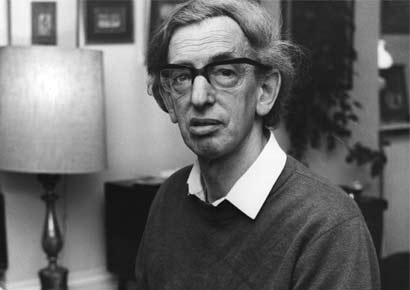
The death of Eric Hobsbawm at aged 95 marks the end of an
era when a group of Communist historians dominated their respective fields of
study. The purpose of this obituary is to place the historian in the context of
his politics and his role as a dominant force inside and out of the Communist
Party Historians Group.
The influence of this group of 'Marxist historians' has
since waned mainly due to the 'Marxism is Dead' campaign which found support
amongst an aggressive collection of revisionist historians who sought to
counter Marxist historiography and to replace it with a hodge-podge of theories
that in one way or another denied that class or economic issues had anything to
do with the revolutionary upheavals of the last four hundred years.
Hobsbawm, who was born in Egypt in 1917 just a few months
before the Bolshevik revolution. His father worked as a colonial officer, and
his mother was Austrian.
Hobsbawm spent his childhood mainly in Berlin. He saw
the early dangers of the rise of Fascism, and the Nazi's hatred of Jews.
Hobsbawm said later on in his life "Anybody who saw Hitler's rise happen
first hand could not have helped but be shaped by it, politically. That boy is
still somewhere inside, always will be".
Hobsbawm left Berlin in 1933 and came to London. His life
spanned all the significant events of the 20th century. It is safe to say his
politics, personality and history writing were shaped by these developments. He
became a communist in 1931. It was unfortunate that the party he joined had
broken decisively with orthodox Marxism and the German Communist party would
later commit the stupendous betrayal in allowing Hitler to come to power
without a shot being fired. The refusal of CPSU to acknowledge any fault for
this calamitous defeat of the German working class led to the Russian Marxist Leon
Trotsky forming a new Fourth International.
In many ways, Hobsbawm perception of the events in Germany
would be important in shaping his future political and historical career. Even
at an early period in his political career, Hobsbawm was on the right of his
newly adopted party, how else do you explain the following extraordinary
statement about the developments in Germany, "Liberalism was failing. If I
had been German and not a Jew, I could see I might have become a Nazi, a German
nationalist. I could see how they would become passionate about saving the
nation. It was a time when you did not believe there was a future unless the
world was fundamentally transformed". In Germany, there was not any
alternative left".
It was untrue. There was a Left Opposition to the rise of
Fascism which sought to oppose both the fascists and the betrayal of the party
that Hobsbawm had just joined. From an early part of his life, it is clear that
Hobsbawm rejected the Trotskyist view of events in Germany.
Hobsbawm's acquiescence to the Stalinist programme and
perspective would be a problem for him in later life and for that matter other
members of the CPHG. Hobsbawm wrote more than 30 books; his most famous works
were the trilogy, The Age of Revolution, The Age of Capital and The Age of
Empire. He characterised the period he wrote about as the "the long 19th
century" from the start of the French revolution in 1789 to the outbreak
of war in 1914, but he wrote very little in the 20th century and most of this
when it was relatively safe to do so.
One striking aspect of the CPHG was that none of them
specialised in twentieth-century history. More specifically, the experiences of
the Russian revolution were never to be explored by the group apart from one
book by Christopher Hill, which in reality was an apology for Stalinism.
According to A Talbot "In more recent areas of history,
as in politics, the control of the Stalinist bureaucracy was too high to allow
the free development of Marxist thought and whether deliberately or not they
all avoided venturing into the modern arena".
As Matt Perry correctly points out, the group had particular
academic freedom on the subject of English history pre 20th century because the
CP had no official line on that period of history.
Hobsbawm was acutely aware that broaching the subject was
largely taboo according to him "it raised some notoriously tricky problems".
According to one essay on the CPHG a study of the journal Our History between
1956 and 1992 showed there was not a single article dealing with any part of
Soviet history.
Eric Hobsbawm was the de facto leader of the historian's group.
It would be fair to say that for good or bad Hobsbawm writings have shaped the
world-historical view of a generation of students, academics and laypeople.
Hobsbawm was part of an extraordinary group of historians that took on many of
the characteristics of a political party. It had membership subscriptions, a
secretary and a chairman.
Despite his politics, Hobsbawm did write some very good
stuff. His essay "The General Crisis of the European Economy in the
Seventeenth Century" and "The Crisis of the Seventeenth Century,
II" were particularly important.
It is a very useful guide to deepen our understanding of the
17th century, which contained a large number of revolutions. It is important to
bear in mind one piece of advice on this subject according to Spinoza "the
order and connection of ideas is the same as the order and connection of things".
While the revolutions in Europe had many differences, they also had significant
similarities.
Hobsbawm's The "general crisis" thesis-like many
ground-breaking essays provoked significant controversy from historians who
opposed the emphasis on the social and economic origins of the revolutions that
were carried out throughout Europe. Also, several historians refused to believe
that there was any "general crisis" at all such as the Dutch
historian Ivo Schöffer, or the Danish historian Niels Steengsgaard.
Eric J. Hobsbawm's essay, which was printed in two parts in
1954, as "The General Crisis of the European Economy in the Seventeenth
Century" and "The Crisis of the Seventeenth Century, II" sought
to present a Marxist analysis of the transformation from a feudal society to a
capitalist one in the 17th century. This change was held responsible for the
revolutions, wars and social unrest that took place. Hobsbawm put forward that
most of the social and economic structures associated with capitalism had grown
and developed during "long sixteenth century." He believed that
feudal "elements fatally obstructed growth" of capitalism. He
believed that a revolution was needed to clear away the feudal rubbish for a
new capitalist system to develop.
The most pronounced expression of this process of was to be
found in England. Hobsbawm writes, "It will be generally agreed that the
I7th century was one of social revolt both in Western and Eastern Europe. This
clustering of revolutions has led some historians to see something like a
general social-revolutionary crisis in the middle of the century. France had
its Frondes, which were significant social movements; Catalan, Neapolitan and
Portuguese revolutions marked the crisis of the Spanish Empire in the I64os;
the Swiss peasant war of I653 expressed both the post-war crisis and the
increasing exploitation of peasant by town, while in England revolution
triumphed with portentous results. Though peasant unrest did not cease in the
West - the "stamped paper " rising which combined middle class,
maritime and peasant unrest in Bordeaux and Brittany occurred in 1675, the
Camisard wars even later- those of Eastern Europe were more significant. In the
i6th century, there had been few revolts against the growing enserfment of
peasants. The Ukrainian revolution of I648-54 may be regarded as a major
servile upheaval.
So must the various " Kurucz " movements in
Hungary, their very name harking back to Dozsa's peasant rebels of I5I4, their
memory enshrined in folksongs about Rakoczy as that of the Russian revolt of
I672 is in the song about Stenka Razin. A major Bohemian peasant rising in i68o
opened a period of endemic serf unrest there. It would be easy to lengthen this
catalogue of the large social upheavals - for instance by including the revolts
of the Irish in 164I and 1689".
Hobsbawm has gone on the record to say that he "was not
a Stalinist. I criticised Stalin, and I cannot conceive how what I've written
can be regarded as a defence of Stalin. But as someone who was a loyal Party
member for two decades before 1956 and therefore silent about a number of
things about which it's reasonable not to be silent - things I knew or
suspected in the USSR. Why I stayed [in the Communist Party] is not a political
question about communism, it's a one-off biographical question. It wasn't out
of idealisation of the October Revolution. I'm not an idealiser. One should not
delude oneself about the people or things one cares most about in one's life.
Communism is one of these things and I've done my best not to delude myself
about it even though I was loyal to it and to its memory. The phenomenon of
communism and the passion it aroused is particular to the twentieth century. It
was a combination of the high hopes which were brought with progress and the
belief in human improvement during the nineteenth century along with the
discovery that the bourgeois society in which we live (however great and
fruitful) did not work and at certain stages looked as though it was on the
verge of collapse. And it did collapse and generated awful nightmares ".
According to the Marxist writer and expert on Leon Trotsky
David North Hobsbawm's writing on the Russian Revolution mostly portrays the
revolution as being "doomed to failure" and a "fatal enterprise."
This leads to the assumption that the breakdown of the Soviet Union was the "Shipwreck
of Socialism."
North admits Hobsbawm has produced some excellent work but,"
the subject of the Russian Revolution is dangerous territory for Professor
Hobsbawm, for in this field his scholarship is compromised by his politics.
Hobsbawm once confessed that as a member of the CPGB he had avoided writing
about the Russian Revolution and the 20th century, because the political line
of his party would have prevented him from being entirely truthful. Why he
chose to remain a member of a party that would have compelled him to tell lies
is a question to which he has never given a convincing answer. At any rate, it
would have been best for him and no loss to the writing of history, had he
continued to limit himself to events before 1900"?
As North points out Hobsbawm did not in later life limit
himself to write on events pre 1900. Hobsbawm was very active writing about
politics. It is in this regard I would like to examine his political career.
While I believe that the plaudits Hobsbawm got recently for his history writing
are thoroughly deserved. Given the level of press coverage and favourable
obituaries from establishment figures highlight the importance Hobsbawm was for
the ruling elite in Britain and internationally.
He was, after all, made– a Companion of Honour. A
rarity for a historian especially of his political persuasion. Hobsbawm was
lauded from both sides of bourgeois democracy in Britain. Labour leader Ed
Miliband said Prof Hobsbawm was "an extraordinary historian, a man
passionate about his politics and a great friend of his family". His
historical works brought hundreds of years of British history to hundreds of
thousands of people. He brought history out of the ivory tower and into
people's lives. But he was not simply academic; he cared deeply about the
political direction of the country. Indeed, he was one of the first people to
recognise the challenges to Labour in the late 1970s and 1980s from the
changing nature of our society."
In this respect, Milliband says more than he intended.
Hobsbawm was a major theoretical architect of the right-wing shift of New
Labour. During his membership of the "Eurocommunist" wing of the CPGB
and his time with the Marxism Today theoretical journal, he wrote many articles
urging Labour to adopt a more right-wing trajectory. In 1978 he wrote the essay
"The Forward March of Labour Halted". Which in many ways, laid the
basis for Labours future development? "If anything, I was an extremely
right-wing Communist and generally attacked by the leftists, including the
leftists in the Labour Party".
Hobsbawm relationship with the origins of New Labour is
explored in an article by Chris Marsden, which reveals Stalinism's role in
spawning new Labour. Marsden said the Communist Party of Great Britain "Euro-Communist"
tendency acted as the midwife of New Labour."
Marsden continues with the observation that Marxism Today
laid the "ideological framework for what was to become New Labour was
first established in the editorial offices of Marxism Today. And it was mostly
made possible to implement the project so defined due above all to the
liquidation of the Soviet Union".
Hobsbawm had no real faith in the revolutionary capacity of
the working class as can be seen in his Marx Memorial Lecture in 1978 and as
Marsden concluded "Hobsbawm too began by asserting that the crisis of the
labour movement could be attributed to the decline of the working class itself.
His evidence for this mainly consisted of a presentation of the fall in the
number of workers employed in heavy industry and the supposedly concomitant
fall in support for the Labour and Communist parties. He then argued that
industrial militancy had failed to provide an answer to the failures of the
Labour government of the time. Hobsbawm's lecture was not just unconvincing. It
was an attempt to provide an apologia for the betrayal of the working class by
Labour and the TUC. He was writing after the election of a Labour government in
1974 as a result of a mass militant movement that culminated in the downfall of
the previous Conservative government of Edward Heath. After making sure minimal
concessions to the miners, who had led that campaign, Labour had proceeded to
implement austerity measures demanded by the International Monetary Fund and, when
this produced a major decline in its support amongst workers, had formed a
coalition with the Liberal Party in order to continue with its attacks.
Hobsbawm responded to this by blaming the working class—and
identifying a supposed decline in its numerical strength—for
Labour's loss of support".
Hobsbawm was not an orthodox Marxist. Politically speaking
Hobsbawm was closer to social democracy and the right-wing side of the Labour
Party than to Marxism. The harsh tone of this obituary should not take anything
away from Hobsbawm's historical writing, especially pre the 20th century, but
you cannot separate his historical writing with his politics. This should be
borne in mind when reading him.