Sunday, 21 August 2011

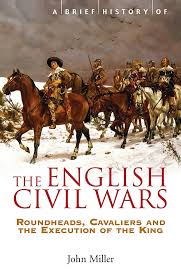
John Miller and the Burial of Revolution

John Miller’s A Brief History of the English Civil Wars is more than just a concise account of the 1640s; it embodies the revisionist orthodoxy that has shaped English Civil War history since the late 20th century. The defining feature of revisionist historiography… is its explicit rejection of the Marxist interpretation that the English Civil War constituted a bourgeois revolution.”

Miller’s work challenges not only Christopher Hill and the Marxist Historians’ Group but also the idea that history progresses through class struggle and revolutionary change.

Miller and the revisionist turn

The revisionist school, including Conrad Russell, John Morrill, Kevin Sharpe, and Miller, emerged specifically to challenge the Marxist claim that the English Civil War was a bourgeois revolution. Hill’s works, The English Revolution 1640 and The Century of Revolution, maintained that the conflict symbolised the political ascendancy of a rising bourgeoisie over a feudal-absolutist regime, paving the way for capitalist growth.

Revisionists challenged this framework by arguing that there is no measurable "rising bourgeoisie," as men from all social classes participated on both sides of the conflict. They claimed that religion and short-term political errors, rather than class struggle, fuelled the events. This perspective views the episode as a largely contingent, preventable tragedy resulting from Charles I’s political mistakes and brief religious divisions. In this view, Charles I’s execution is seen as an unfortunate accident rather than the decisive overthrow of a feudal system.

Miller’s book illustrates this change by providing a vivid narrative and personality-focused explanations instead of a deep analysis of social forces at work. It richly describes court intrigues, religious factionalism, and military campaigns, but it does not explore the core contradictions of a society shifting from feudal to capitalist structures. This approach is typical of the revisionist tendency to shift from structural analysis toward emphasising contingency and “high politics.”

Hill and the concept of bourgeois revolution

The Marxist interpretation by Hill and British Marxist historians never relied on a simple, mechanically deterministic model. Hill recognised that a “chemically pure revolution"—where all members of a class align perfectly—was unrealistic. As Ann Talbot notes, "Hill... had read enough Marx and Lenin to understand that one could not expect a chemically pure revolution." The focus is not on sociological neatness but on the revolution's actual function: it inherently advanced bourgeois interests by dismantling the feudal-absolutist state, executing the king, abolishing feudal tenures, and creating the political environment necessary for capitalist growth. Hill’s works—Intellectual Origins of the English Revolution, Economic Problems of the Church, and The Century of Revolution—connect ideological and religious conflicts to changes in property, commerce, and class dynamics.

What Miller’s approach obscures

Revisionism cannot account for why people at the time viewed the 1640s as a period of unprecedented upheaval. As censorship eased, groups like the Levellers, Diggers, Ranters, and Fifth Monarchists gained visibility in print, advocating demands that went beyond merely restoring an “ancient constitution”: "They called for levelling social classes, ending private property, and establishing the rule of the saints." These groups articulated, using religious language, the social tensions brought about by the collapse of feudal relations and the rise of new forms of property and authority. Hill’s research considered these voices as evidence of profound structural change, whereas revisionism tends to dismiss them as marginal, eccentric, or solely theological.

The political function of revisionism

Miller’s focus on narrative and personality shifts away from exploring why civil war became possible and, eventually, inevitable. This creates a depoliticised history marked by vivid descriptions but lacking causal explanation, contingency without necessity, and tragedy without revolutionary context. The rise of revisionism can be traced to the period after the USSR's dissolution and the ideological campaigns against Marxism: "The revisionist school gained ascendancy in the period following the dissolution of the USSR, when the bourgeoisie internationally sought to bury the concept of revolution itself.”

This is essential. Denying that the English Civil War was a bourgeois revolution is tantamount to denying that capitalism arose through revolutionary violence. If capitalism is seen as the outcome of slow, peaceful development, then viewing it as susceptible to overthrow via revolutionary struggle is dismissed from the start. Ann Talbot’s WSWS review of Hill clearly links this political viewpoint: “The prevailing academic orthodoxy is that there was no bourgeois revolution because there was no rising bourgeoisie and that people from all social classes can be found on either side of the struggle ... The whole unpleasant episode could have been avoided if only Charles II had been a little wiser.”

Contemporary significance

Many modern historians, like Simon Schama, often see themselves as "born-again Whigs,” offering a polished account of constitutional development and national cohesion. This view echoes the tradition that Hill aimed to challenge during his work. Instead of introducing a radically new perspective, revisionism mainly revisits earlier, pre-Marxist Whig interpretations of history, now presented with an air of empirical scepticism.

Today, whether the English Civil War was a bourgeois revolution remains a relevant issue for the working class. “A class that cannot face its own revolutionary origins cannot face the revolutionary future that awaits it." The bourgeoisie once celebrated its revolutionary history; now, its denial of that past shows its evolution into a fully counter-revolutionary class. To see the English Revolution as a true revolution—and to glean lessons for the fight against capitalism—is the role of Marxist history and a politically organised, conscious working class.

Miller’s A Brief History of the English Civil Wars, by aligning with revisionist orthodoxy, engages in the ideological act of masking that revolutionary legacy. In contrast, your critique aligns with the traditions of Hill and Trotsky, emphasising that the English Civil War was a pivotal event marking the shift from feudalism to capitalism, and that its significance can only be understood from the perspective of class struggle.

Bibliography

Primary and historiographical works

  • Christopher Hill, The English Revolution 1640 (London: Lawrence & Wishart, 1940).
  • Christopher Hill, The Century of Revolution 1603–1714 (London: Nelson, 1961).
  • Christopher Hill, Intellectual Origins of the English Revolution (Oxford: Clarendon Press, 1965).
  • Christopher Hill, Economic Problems of the Church in the Sixteenth Century (London: Oxford University Press, 1956).
  • Leon Trotsky, Where Is Britain Going? (London: New Park Publications, 1973; originally 1925).
  • John Miller, A Brief History of the English Civil Wars (London.
  • Conrad Russell, The Causes of the English Civil War (Oxford: Clarendon Press, 1990).
  • John Morrill, “The Religious Context of the English Civil War,” like the English Revolution, ed. Morrill (London: Longman, 1993).
  • Kevin Sharpe, The Personal Rule of Charles I (New Haven: Yale University Press, 1992).

On Marxist and revisionist historiography

  • Alastair MacLachlan, The Rise and Fall of Revolutionary England: An Essay in the Fabrication of Seventeenth‑Century History (New York: St. Martin’s Press, 1996).
  • Harvey J. Kaye, The British Marxist Historians (Cambridge: Polity Press, 1984).

WSWS and contemporary commentary

  • Ann Talbot, “Christopher Hill and the English Revolution,” World Socialist Web Site (WSWS).
  • Simon Schama, various works and interviews describing himself as a “born‑again Whig” in relation to English history.


Wednesday, 3 August 2011

Review of Michael Bennett’s The Civil Wars Experienced: A Marxist Reassessment

Michael Bennett’s The Civil Wars Experienced offers a clear and engaging overview of the English Civil War, aiming to expand the narrative beyond just Westminster and Whitehall. His focus on the lived experiences of ordinary people, along with his coverage of the Scottish and Irish theatres and emphasis on the conflict's brutality and social upheaval, reflects key aspects of the 1990s revisionist perspective. However, this strength is tempered by a notable limitation: Bennett almost uncritically accepts the revisionist view that rejects labelling the English Revolution as a bourgeois revolution. This interpretive stance is significant, as it represents one of the major historiographical debates of the past fifty years, with Bennett aligning with the camp that sees the revolution as a multinational crisis devoid of social content.

Bennett’s work, while full of narrative detail, is constrained by the revisionist framework he uses. Viewing the English Civil War as a revolution—one that shattered the feudal aristocracy’s political power and laid the groundwork for capitalism—requires a socio-economic analysis that Bennett neither attempts nor acknowledges. As a result, his book effectively describes the war but does not interpret it as a revolution.

The Revisionist Turn: Description Without Explanation

Bennett is part of a group—including Morrill, Stoyle, Lindley, and, earlier, Conrad Russell—that, in the 1990s, challenged the dominant Marxist and Whig views of the mid-20th century. Their aim was not just to refine previous “grand narratives" but to launch a political counter-attack against the very idea of the bourgeois revolution, as the critique suggests.

The revisionist method is familiar: collect empirical anomalies, emphasise local and contingent factors, highlight cross-class loyalties, interpret ideological innovation as religious eccentricity, and dismiss socio-economic causation as merely 'deterministic.' Bennett adheres to this method, noting that individuals from all social classes participated on both sides of the conflict and concluding that class struggle does not account for the war. However, this reflects a fundamental misunderstanding of the Marxist approach. “One does not expect a chemically pure revolution in which members of a single social class align on one side of the barricades and members of another on the opposite side.”

The goal is not merely to tally artisans or gentlemen on each side. Instead, it is to uncover the social forces that drove diverse people into conflict and to examine the new, revolutionary ideas that often appeared in the form of religious sectarianism—sometimes in a "curious and archaic guise." Despite its rich empirical detail, Bennett’s book focuses on describing the war rather than on exploring the causes of the revolution.

The “Three Kingdoms” Framework: A Useful Lens Turned Into an Evasion

Bennett’s key organising principle is the “Wars of the Three Kingdoms” framework. This approach is not inherently problematic, as understanding the English Revolution requires considering Scotland and Ireland. However, revisionists employ this framework not to enhance analysis but to avoid it. When used to soften or dismiss the revolutionary aspects of the events, this framework becomes a form of evasion.

Bennett’s account portrays the conflict as a national crisis involving governance, dynasties, and religious tensions throughout Britain. However, it overlooks the revolutionary break of 1649—the execution of Charles I, the abolition of the monarchy and the House of Lords, and the emergence of parliamentary sovereignty. These were truly revolutionary acts, not just constitutional errors. The choice of the term “Three Kingdoms” instead of "English Revolution” reflects a specific political stance, not neutrality. This perspective frames the revolution as a tragic event that could have been avoided “if only Charles I had been a little wiser," echoing Royalist sentiments in a modern academic tone.

Why the Bourgeois Revolution Framework Remains Indispensable

Bennett dismisses the notion that the English Civil War was a bourgeois revolution without offering arguments, as if the question were already settled. However, the framework of a bourgeois revolution remains crucial for several reasons. The defining feature of a bourgeois revolution is its outcome, not the purity of class struggles: it involves the dismantling of feudal political systems, the establishment of parliamentary dominance, the rise of ideas like natural rights and contract theory, and the paving of the way for capitalism. The execution of Charles I was not merely a misunderstanding among kingdoms; it marked a fundamental break from feudal traditions. “No monarch sat easily on the throne after that event, emphasising its revolutionary significance.

The Revisionists Reject Causation Itself

The revisionists’ main argument—that there was no growing bourgeoisie and thus no bourgeois revolution—is historically unsustainable. In early seventeenth-century England, there was significant economic change: expansion of commercial agriculture, London’s rise as a financial hub, greater involvement in global trade, and the rise of a politically active gentry and merchant class. Ignoring these changes overlooks the very factors that enabled the revolution.

The Levellers, Diggers, and sectarian radicals were not just religious eccentrics; they also promoted new ideas about sovereignty, natural rights, and political equality. These notions were revolutionary, even when conveyed through biblical language. Bennett recognises their existence but struggles to explain how these ideas arose.

Hill’s Achievement—and the Task That Remains

Christopher Hill’s achievement was twofold: he identified the mid-seventeenth-century crisis as a revolution that overthrew one class and brought another to power. He recognised that the masses drive revolutions and require a change in consciousness. Bennett’s work implicitly challenges both ideas. However, Hill also had his limitations; he never fully contextualised the English Revolution within its broader international setting.

A comprehensive Marxist analysis should incorporate the wider European context, including the Thirty Years' War, Dutch republicanism, continental natural rights theory, and the decline of feudalism across Europe. In contrast, the revisionists, by restricting their focus to three kingdoms, distance themselves further from this broader international perspective.

Bennett’s Strengths and the Marxist Counter‑Case

Bennett’s The Civil Wars Experienced provides a clear, accessible, and often vivid overview of the conflict. It works well as a narrative history and offers insight into the human experience of war. However, its analysis is limited by its revisionist approach, which dismisses socio-economic causes, interprets revolutionary upheaval as merely a dynastic crisis, and considers ideological change as religious eccentricity.

Sources and Bibliography

Primary Sources

  • Burton, Thomas. Parliamentary Diary. London: 1828.
  • Clarendon, Edward Hyde. The History of the Rebellion and Civil Wars in England. Oxford: 1702–1704. (Clarendon’s analysis of political divisions is cited in JSTOR’s discussion of Marx and Engels’ interpretation of the Civil War .)
  • Hobbes, Thomas. English Works. London: 1839–45. (Hobbes’ remarks on the social power of the Presbyterians are referenced in the JSTOR article .)
  • Harrington, James. The Commonwealth of Oceana. London: 1656. (Harrington’s class analysis is discussed in the JSTOR article .)

Marxist Historiography

  • Carr, E.H. What Is History? London: Penguin, 1961.
  • Engels, Friedrich. The Peasant War in Germany. 1850.
  • Hill, Christopher. The Century of Revolution, 1603–1714. London: Nelson, 1961.
  • Hill, Christopher. Intellectual Origins of the English Revolution. Oxford: Clarendon Press, 1965. (Hill’s method and influence are discussed in Elearn College’s article on Marxist historians .)
  • Hill, Christopher. The World Turned Upside Down: Radical Ideas During the English Revolution. London: Penguin, 1972. Hill’s focus on radical movements is discussed in the 2026 article on his historiographical impact
  • Hill, Christopher. Economic Problems of the Church. Oxford: Clarendon Press, 1956. (Referenced in Elearn College’s discussion of Hill’s economic analysis .)
  • Hilton, Rodney. Bond Men Made Free: Medieval Peasant Movements and the English Rising of 1381. London: Temple Smith, 1973.
  • Hobsbawm, Eric. The Age of Revolution, 1789–1848. London: Weidenfeld & Nicolson, 1962.
  • Thompson, E.P. The Making of the English Working Class. London: Gollancz, 1963.

Revisionist Historiography

  • Bennett, Michael. The Civil Wars Experienced. London: Routledge, 2000.
  • Morrill, John. The Nature of the English Revolution. London: Longman, 1993.
  • Russell, Conrad. The Causes of the English Civil War. Oxford: Clarendon Press, 1990.
  • Russell, Conrad. Parliamentary History in the 17th Century. Various essays.
  • Stoyle, Mark. Soldiers and Strangers: An Ethnic History of the English Civil War. New Haven: Yale University Press, 2005.
  • Lindley, Keith. The English Civil War and Revolution: A Sourcebook. London: Routledge, 1998.

Three Kingdoms / British Context

  • Canny, Nicholas. Making Ireland British, 1580–1650. Oxford: Oxford University Press, 2001.
  • Cust, Richard, and Hughes, Ann (eds.). The English Civil War. London: Arnold, 1997.
  • Ó Siochrú, Micheál. God’s Executioner: Oliver Cromwell and the Conquest of Ireland. London: Faber & Faber, 2008.
  • Stevenson, David. The Scottish Revolution, 1637–1644. London: David & Charles, 1973.

International and Continental Context

  • Asch, Ronald G. The Thirty Years’ War: Europe’s Tragedy. London: Allen Lane, 2010.
  • Israel, Jonathan. The Dutch Republic: Its Rise, Greatness, and Fall, 1477–1806. Oxford: Oxford University Press, 1995.
  • Skinner, Quentin. The Foundations of Modern Political Thought. Cambridge: Cambridge University Press, 1978.
  • Trevor-Roper, Hugh. Religion, the Reformation, and Social Change. London: Macmillan, 1967.

Modern Marxist Commentary

  • Talbot, Ann. “Christopher Hill and the English Revolution.” World Socialist Web Site, 2003.
  • North, David. The Russian Revolution and the Unfinished Twentieth Century. Mehring Books, 2014.
  • Walsh, Chris. Various articles on revisionism and bourgeois revolution, WSWS.

Articles Identified in Search Results

  • “The English Civil War Interpreted by Marx and Engels.” JSTOR. (Contains discussion of Harrington, Hobbes, Clarendon, and class analysis in contemporary sources. )
  • “Marxist Historians and English Civil War.” Elearn College, 2025. (Discusses Hill’s intellectual legacy and Marxist historiography. )
  • “How Christopher Hill Turned History Upside Down by Studying the Radicals of the English Civil War.” 2026. (Provides biographical and historiographical context for Hill’s work. )