Tuesday, 13 September 2022

Review-Act of Oblivion by Robert Harris-Hutchinson Heinemann-1st edition (September 1st 2022)


"There are ideal series of events which run parallel with the real ones. They rarely coincide. Men and circumstances generally modify the ideal train of events so that it seems imperfect, and its consequences are equally imperfect. Thus with the Reformation, instead of Protestantism came Lutheranism."

The Mystery Of Marie Rogêt" (1842) by Edgar Allan Poe.

"If one man is fated to be killed by another, it would be interesting to trace the gradual convergence of their paths. At the start, they might be miles away from one another, and yet eventually, we are bound to meet. We can't avoid it."

Vasily Grossman's Life and Fate

It is perhaps an understatement to say that Robert Harris is a remarkably versatile and clever writer. He has written numerous books on wide-ranging subjects such as Ancient Rome and The Second World War and a book set 800 years in the future. Titles including 'Fatherland', 'Munich' and 'An Officer and a Spy.

His latest narrative-driven book examines one of the most contentious periods in British, if not world history, The English Revolution. It is well-written and researched.

The book covers Charles I execution and the subsequent pursuit of two leading regicides who signed the king's death warrant. Colonel Will Goffe and Edward Whalley were exiled to America in 1660, where they were welcomed with open arms by many colonists who were Puritans and had supported their political stance against the king. Both men were high-ranking soldiers in the New Model Army, and Whalley was Oliver Cromwell's cousin. Both played an important part in the successful English revolution.

Harris's book treads an already well-trodden path. The last few years alone have seen numerous books on the subject covered in his book.[1]The book appears well researched, but Harris, like many other historians, has found a dearth of information about what Walley and Goffe did in America. So like all good writers, he makes things up and employs a method favoured by the 18th-century writer, poet and philosopher Novalis, who wrote, "There are ideal series of events which run parallel with the real ones. They rarely coincide. Men and circumstances generally modify the ideal train of events to seem imperfect, and its consequences are equally imperfect."[2]

Regarding historiography, the book is part of a new wave of studies, both fiction and non-fiction, concentrating on different aspects of the Royalist cause in the 17th century.

Not all historians are fans of narrative-based historical writing. When C V Wedgwood produced her splendid book A King Condemned-The Trial and Execution of Charles Ist, it was criticised by some historians. In the foreword of  the 2011 edition, Clive Holmes said: "Wedgwood's relationship with academic historians was not an easy one, and the immediate reception of this work by the professionals in their flagship journals was cool and even condescending."

While Harris's invention of the character Richard Naylor is legitimate and interesting, one can't help feeling that Harris is trying to persecute the two regicides again. He seems a bit miffed that they escaped the so-called royal justice of Charles II. Further hostility came from the pen of the Guardian newspaper, Andrew Taylor writes, "It's not easy to make Whalley and Goffe sympathetic to a modern sensibility. They were hardcore Puritans who believed that only the elect would go to heaven, that their aggressively righteous ends justified their often ruthless means and that the world would end in 1666."[3]

Just like their modern counterparts, the late 17th  English bourgeoisie would rather forget their revolution of the 1640s; hence The 1660 Act of Oblivion(the title of the book), which was an act of parliament that was supported by Charles II to draw a line under the events of the 1640s and pretend they never happened.

'The wounds of the brutal civil war are still visible on men's bodies": the execution of Charles I in Whitehall, London, 1649. Illustration: Hulton Archive/Getty Images

But it cannot be denied that the killing of the king had, as Ann Talbot recounts, "a profound revolutionary significance entailing a complete break with the feudal past. Although the monarchy was later restored and the triumphant bourgeoisie was soon eager to pretend that the whole thing had been a dreadful mistake, no monarch sat quickly on the throne after that event until quite late in Victoria's reign".

Also as Christopher Hill put it so well, "In 1660 passive obedience was preached in all pulpits; a King was brought back "with plenty of holy oil about him," because this was necessary for Parliament, for the possessing classes, threatened by social revolution from below. A white terror was introduced by the returned émigrés, and an attempt was made to drive from political life all who did not accept the restored régime in Church and State (the Clarendon Code, the Test Act). Educational advances, like the purge which had made Oxford a centre of scientific research, were reversed. All this broke the revolutionary-democratic movement for the moment, though it fought back again in the sixteen-seventies and -eighties. In 1662 a Presbyterian minister, who had been deprived of his living by the Restoration, wrote in words that recaptured the fears of many respectable members of the possessing classes at that time: "Though soon after the settlement of the nation we saw ourselves the despised and cheated party ... yet in all this, I have suffered since, I look upon it as less than my trouble was from my fears then ... Then we lay at the mercy and impulse of a giddy, hot-headed, bloody multitude."[4]

Harris's book, albeit fictitious in parts, shows that this manhunt dominated the reign of Charles II. While sanctioning what amounted to judicial murder, the regime was hardly a picture of stability. The longer the show trial went on, the more nervous Charles and his ministers became and recognised the growing danger of rebellion. Charles II made one mistake in giving a public funeral to one of the regicides. Over twenty thousand people attended, testifying to the still considerable support for Republican ideas.

Conclusion

One of the difficulties of writing about this period of English history is that, as one writer put it, "intricacies of religious faith and faction can seem distant and abstruse to a modern audience". But Harris's book is timely as the United Kingdom is living through a period of constitutional upheaval and faces the distinct possibility of breaking up. Act of Oblivion is an enjoyable read and has a ring of authenticity. It is pointless recommending this book, and Harris's books sell in the millions, but it is a good read.


Notes

1.   The Indemnity and Oblivion Act 1660 was an Act of the Parliament of England (12 Cha. II c. 11), the long title of which is "An Act of Free and General Pardon, Indemnity, and Oblivion". This act was a general pardon for everyone who had committed crimes during the English Civil War and subsequent Commonwealth period, with the exception of certain crimes such as murder (without a licence granted by the King or Parliament), piracy, buggery, rape and witchcraft, and people named in the act such as those involved in the regicide of Charles I. It also said that no action was to be taken against those involved at any later time and that the Interregnum was to be legally forgotten.


[1] See Charles I's Executioners -Civil War, Regicide and the Republic By James Hobson- Pen & Sword History-Published: 4th November 2020. https://keith-perspective.blogspot.com/2021/04/charles-is-executioners-civil-war.html andKillers of the King - The Men Who Dared to Execute Charles I Hardcover – Charles Spencer 11 Sep 2014 352 pages Bloomsbury Publishing - ISBN-13: 978-1408851708-https://keith-perspective.blogspot.com/2014/10/killers-of-king-men-who-dared-to_23.html

[2] The Mystery Of Marie Rogêt" (1842) by Edgar Allan Poe

[3] https://www.theguardian.com/books/2022/sep/08/act-of-oblivion-by-robert-harris-review-regicides-on-the-run

[4] The English Revolution 1640- https://www.marxists.org/archive/hill-christopher/english-revolution/

Friday, 9 September 2022

Commentary on The London Revolution Review

I am afraid that Sturza’s account of the events of the 1640s and your analysis of its merits (and faults) is not correct, Keith. First of all, the historiography of this period is wrong. The problems with a materialist or Marxist explanation were apparent well before the rise of so-called ‘Revisionism’ in the mid-1970s. The debates over the fortunes of the gentry between Tawney and Stone on one side and Trevor-Roper and J.P.Cooper on the other had stimulated a raft of research into the condition of landowners In many counties across England but also the growth of county studies and the hypothesis first advanced by Alan Everitt about the importance of localism in the ensuing conflicts.

John Morrill cut his historical teeth in this area and has never, to my knowledge, subscribed to the view that the English Civil War or Revolution came as a bolt from the blue.) In Cambridge, the work of Peter Laslett and the CAMPOP group called into very serious question whether any classes in the Marxist sense existed at all.

The idea that capitalist merchants and farmers had come by 1640 to find themselves temporarily aligned with the interests of artisans and peasants against the Caroline regime, which was Christopher Hill’s view in 1940, does not hold water if only because the early Stuart monarchs were keen on promoting economic innovation, new industrial inventions and overseas trade: if you look at the papers of Lionel Cranfield or Arthur Ingram (or those of Sir John Bankes in the Bodleian Library), you will see what I mean.

There is certainly no evidence whatsoever that, as a result of the events of the 1640s and 1650s, the rule of one class was replaced by that of another, whatever Ann Talbot claimed. The larger landowners were predominant after 1660 as they had been before 1640. (W.R.Emerson’s account of the growth of large landowners’ fortunes is better than that of Lawrence Stone in 1965 or 1972.) Nor should it be forgotten that Valerie Pearl and Keith Lindley have shown how closely aligned the groups in the Long Parliament were to their allies in the urban area of London: mob activities and riots were much less important than figures like Hill or Manning, or Sturza supposed.

Furthermore, London was not the entire kingdom: beyond its bounds, there were important groups of supporters of the Long Parliament in counties, towns and villages, just as there were neutrals and supporters of the Royalist cause. The links between landowners, their tenants, allies and supporters in the countryside were critical too in the Long Parliament’s military victories by 1646 and the period between 1648 and 1651.

I should add that Christopher Hill did not fail to take on the ‘Revisionists’. If you look at his Open University A203 course, England: A Changing Culture 1618-1689 (Block 3, Pp.72-78), you will see one of his attempts to reply to Conrad Russell’s post-1975  work. In fact, ‘revisionism’ had a long pre-history stretching back into the 1960s and was over by the early-1990s. It was not the product of a capitalist attack on the working class, nor did it have any links with Margaret Thatcher or Ronald Reagan’s political views. This contention is completely untenable. 

Similarly, the grounds for thinking that what happened in the British Isles or in England in the 1640s was a ‘bourgeois revolution’ are not tenable. Those events can be more clearly seen as comparable to the revolt of the Low Countries or the French Wars of Religion in the second half of the sixteenth century, the revolts of Portugal and Catalonia in 1640 or the Frondes in France in the years between 1648 and 1653. ‘Les grand soulevements’ in these places and times never fitted into the framework postulated by Marx, Engels and their successors. Marx et al. asked interesting questions but their answers were never convinced.

C Thompson


Thursday, 8 September 2022

The London Revolution 1640-1643: Class Struggles in 17th Century England-Michael Sturza-The Mad Duck Coalition, New York, 2022. 230 pp., $25


"The 'great' national historian Macaulay vulgarises the social drama of the seventeenth century by obscuring the inner struggle of forces with platitudes that are sometimes interesting but always superficial."

Leon Trotsky

"The dreams of a Milton, a Winstanley, a George Fox, a Bunyan, were not realised; nor indeed were those of Oliver himself: 'Would that we were all saints'."[1]

Christopher Hill

"English academics always hated revolutions so that there is an in-built pleasure in being able to get back, as some of them tried to do, to saying nothing important had happened. French, Russian and American historians have accepted revolutions as part of their tradition, whereas we've always hushed ours up and transferred it to the Glorious Revolution of 1688."[2]

Christopher Hill

 The London Revolution 1640-1643 does not contain any new research from previously used new primary archival sources. It, however, stands on the shoulders of previous work and provides the uninitiated with a useful summary of the main points of the English revolution.

Sturza's defence of the concept of an English revolution is to be welcomed, as is his attempt to explain the English Revolution from the standpoint of a historical materialist outlook. As Frederick Engels so eloquently put it, "The materialist conception of history starts from the proposition that the production of the means to support human life and, next to production, the exchange of things produced, is the basis of all social structure; that in every society that has appeared in history, the manner in which wealth is distributed and society divided into classes or orders is dependent upon what is produced, how it is produced, and how the products are exchanged. From this point of view, the final causes of all social changes and political revolutions are to be sought, not in men's brains, not in men's better insights into eternal truth and justice, but changes in the modes of production and exchange."[3]

The book offers a basic understanding of the main historical events for the reader new to the English revolution. But its main task is to highlight the revolution's fundamental political and class character. Many of the main revolutionary figures of the English Revolution were moved, as Sturza outlines in the book, by definite social, political and economic ideas. Still, their ideas were often cloaked in religious form. Many varied social currents brought people of diverse social backgrounds into a struggle against the king. They sought to understand the new and revolutionary ideas in the curious and archaic guise in which they appeared. They turned to the only source available to understand these ideas, the Bible.

Sturza's book pays considerable attention to the works of previous Marxists while also examining current historiography, which has been dominated over the past few decades by revisionist and post-revisionist ideologues. Sturza correctly explains that revisionism was an academic articulation of capitalism's attack on the working class. Reagan-Thatcher's right-wing agenda was enforced by a violent assault on the working class. The high point of this assault in the UK was the year-long civil war conducted by the British police against the coal miners' strike of 1984-85.

The English revolution was not the only revolution under attack from the revisionists. The French, Russian and, very recently, the American Revolution have all come under sustained attack from revisionist historians.

What makes Sturza's book different from the previous historiography, according to Alan Wallis, professor of history at New Jersey City University, is that "unlike most other writings on the English Revolution, the English Revolution was driven by petty-bourgeois artisans under militant Puritan leadership rather than the moderate gentry in the House of Commons, as is usually claimed by historians who deny or ignore the importance of leadership in carrying out any successful revolution. Sturza illustrates how the protests and street battles in the early 1640s foreshadowed the Civil War, which many historians have presented as an inexplicable bolt from out of the blue."[4]  

One of those historians who thought the revolution was a bolt from the blue was the dean of revisionism, John Morrill. Morrill's essay 'Revisionism's Wounded Legacies' neatly encapsulated his opposition to any theory that remotely smacked of revolution or Marxism, prompting one colleague to ask him if there was ever a civil war in the first place. Morrill explained that his Revisionism "was a revolt against materialist or determinist histories and historiographies."[5].

However, Morrill made one insightful remark in that essay in that he correctly states that every historian writing on the English revolution had to define their attitude to the work of Christopher Hill. The same must be said of Sturza. Christopher Hill, whose astonishing early book, The English Revolution 1640, had defined the English revolution as a bourgeois revolution, has achieved widespread acclaim and, to some extent, has not been bettered.

In it Hill writes, "England in 1640 was still ruled by landlords and the relations of production were still partly feudal, but there was this vast and expanding capitalist sector, whose development the Crown and feudal landlords could not forever hold in check. There were few proletarians (except in London), and most of the producers under the putting-out system being also small peasants. But these peasants and small artisans were losing their independence. They were hit especially hard by the general rise in prices and were brought into ever closer dependence on merchants and squires. A statute of 1563 forbade the poorer 75 per cent of the rural population to go as apprentices into the industry. So there were three classes in conflict. As against the parasitic feudal landowners and speculative financiers, as against the government whose policy was to restrict and control industrial expansion, the interests of the new class of capitalist merchants and farmers were temporarily identical to those of the small peasantry and artisans and journeymen. But the conflict between the two latter classes was bound to develop since the expansion of capitalism involved the dissolution of the old agrarian and industrial relationships and the transformation of independent small masters and peasants into proletarians."[6]

Hill was extremely sensitive enough to his historical sources to understand and write about the social currents that brought people of different social backgrounds into a struggle against the king. From early in his career, he identified new and revolutionary ideas in the curious and archaic guise in which they appeared. These ideologists of the revolution used the Bible to find a precedent for their actions.

As Ann Talbot explains, "Hill's achievements were twofold. Firstly he identified the mid-seventeenth century crisis as a revolution which overthrew the rule of one class and brought another to power in the case of Britain. Secondly, he recognised that the mass makes revolutions of the population and that for a revolution to occur, the consciousness of that mass of people must change since a few people at the top do not cause revolutions. However, the character of their leadership is crucial at certain points. These achievements were considerable at the time and are of continuing relevance today when historians increasingly reject any serious economic or social analysis and argue that revolutions are nothing but the work of a tiny group of conspirators.[7]

Sturza spends a lot of this book attacking Hill. In his conclusion, he chides Hill for not taking on the revisionists, but as Ann Talbot points out, Hill was a better historian than a political thinker. Also contained in the book's conclusion is Sturza's assertion that the English revolution was a "bourgois revolution from below and that petty-bourgeois artisan craftworkers, shopkeepers, early manufacturers, domestic traders and mariners…provided the horsepower of the revolution.'

Sturza's formulation is confusing and not an orthodox Marxist position. He would have done well to read and then quote the Russian Marxist Leon Trotsky for a clearer understanding of how the revolution unfolded and how the social forces within it related to each other. Trotsky writes:

"The adherents of the Episcopal or Anglican, semi-Catholic church were the party of the court, the nobility and of course the higher clergy. The Presbyterians were the party of the bourgeoisie, the party of wealth and enlightenment. The Independents, and the Puritans especially, were the party of the petty bourgeoisie, the plebeians. Wrapped up in ecclesiastical controversies, in the form of a struggle over the religious structure of the church, there took place social self-determination of classes and their re-grouping along new, bourgeois lines. Politically the. Presbyterian party stood for a limited monarchy; the Independents, who then were called root and branch men or, in the language of our day, radicals, stood for a republic. The halfway position of the Presbyterians fully corresponded to the contradictory interests of the bourgeoisie -- between the nobility and the plebeians. The Independents' party, which dared to carry its ideas and slogans through to its conclusion, naturally displaced the Presbyterians among the awakening petty-bourgeois masses in the towns and the countryside that formed the main force of the revolution. Events unfolded empirically. In their struggle for power and property interests, both the former and the latter side hid behind a cloak of legitimacy."[8]

To conclude, The English bourgeois revolution is a complex subject, and one book does not do it justice. However, despite its limitations, Sturza's book gives the reader a good introduction to the topic. Further criticisms of the book will follow in a postscript to this review. Comments on the text and this review are welcome.


[1] https://www.wsws.org/en/articles/2003/03/hill-m25.html

[2]https://www.marxists.org/history/etol/newspape/isj2/1992/isj2-056/hill.html

[3] Socialism: Utopian and Scientific

[4] https://marxandphilosophy.org.uk/reviewer/19991_alan-wallis/

[5]Revisionism's Wounded Legacies-John Morrill -Huntington Library Quarterly

Vol. 78, No. 4 (Winter 2015), pp. 577-594

[6] The English Revolution 1640- www.marxists.org/archive/hill-christopher/english-revolution

[7] "These the times ... this the man": an appraisal of historian Christopher Hill- www.wsws.org/en/articles/2003/03/hill-m25.html

[8] Two traditions: the seventeenth-century revolution and Chartism- https://www.marxists.org/archive/trotsky/works/britain/ch06.htm


Sunday, 4 September 2022

Some Thoughts on the Notting Hill Carnival of Vanities 2022

The UK's Notting Hill Carnival returned to London's streets after a two-year absence caused by the coronavirus pandemic. My first thought is why given that a deadly virus is still around and putting people in hospital and killing thousands, would two million people turn up to an event that, by its very nature, would spread the virus and cause untold suffering and possibly death to vulnerable people who will in the future come into contact with persons who went to the Carnival?

If that was not bad enough, footage has emerged on the internet of people packed so tight on the street that it constituted a threat to safety. To escape being crushed, people climbed over railings and into basements to avoid the surge of people. The scenes were reminiscent of the Hillsborough disaster, only thankfully without the death toll.

Quite what attracts people to this event is a mystery. While I grant you the costumes are pretty, and some people have a bit of fun, the experience must be pretty bad for the majority. With an all-time high of 38 gigantic sound systems, you would have thought the music would have been of a high calibre. However, this was not the case. The fact that no musicians of any world renown would be caught dead performing at Carnival is telling.

Secondly, having experienced being close to a fifty-foot sound system, one is completely numb and deaf after only a few seconds. It is also very difficult to appreciate the musical vibes when you are sky-high after breathing in gallons of nitrous oxide. So far, thousands of large gas canisters weighing in total 4 tonnes have been collected from the streets. Hospitals expect to have to treat a large number of young people for nerve damage.

It is also hard to fathom why people think it is their democratic right to have fun, dance, drink, and take drugs while the victims of the Grenfell fire have still not received justice. The RBKC council and the organisers of the Notting Hill Carnival paid lip service by holding a 72-second silence but still allowed the Carnival to go ahead. At the same time, the ashes of over 72 people remain in the tower block, which can be seen in full view of people dancing and parading in the streets. The reason for this is not hard to fathom. The Carnival has become big business.

The presence of companies including Red Bull and Virgin Atlantic have meant the Carnival has become not only a money spinner for big business, but several small organisations and even residents have monetised the event out of all recognition from its earliest anti-racist and anti-capitalist origins.

As Dr Razaq Raj writes , "the commercialisation of Carnival began with the sponsorship of Lilt in 1995, a tropical fruit-flavoured soft drink manufactured by Coca-Cola, in which it became the Lilt Notting Hill Carnival; this arrangement continued in 1996 and 1997 (Carver, 2000). The Carnival was sponsored by Virgin Atlantic in 1998 when Nestle (who were meant to sponsor the event) withdrew their support  (BBC News, 1998). Western Union Notting Hill Carnival became the festival's name in 1999 when Western Union sponsored the event. Notting Hill's commercialisation highlights the event's growth since its humble beginnings. It is symbolic of the conflict between the political and radical past to the present day organised and funded event. The commercialisation of Carnival highlights its growth but also critical problems for the event and carnival management. The conflict between the radical past and conservative operations of Notting Hill Carnival presents the main questions as to the future purpose of Notting Hill Carnival. Has this cultural event that acted as a political vehicle for the community fallen victim to the Western capitalist society?[1]

Carnival 2022 was a sanitised and unpolitical event. The Carnival has become so far removed from its origins that it is unrecognisable from its early days as a vehicle of protest against racism and slavery. In historical terms, sixty years is not a long time. Sixty years ago, the fascists were openly marching on the streets of Notting Hill, and the fascist leader Oswald Mosely was holding meetings on the Goldborne rd.

As the Marxist writer, Cliff Slaughter wrote in 1958, "The race riots in Nottingham and London came like a bolt from the blue to most ordinary men and women in Britain, just as they did to the Press, that self-styled watchdog of the public conscience. The Observer, usually more far-sighted than most newspapers, spoke of the race riots as something which seemed a cloud no bigger than a man's hand a few days earlier. So long as we look only at the surface of social life and try to deal with each question separately as it arises, we shall continue to find ourselves bewildered by events like the race riots. But they are no nine days wonder. Every worker in the country must clearly understand this.

Every member of the working class must endorse the condemnation by the Trades Union Congress of racial discrimination and violence. But this is not enough. Only if we can trace the social roots of racial conflict shall we be able to weed them out and those who profit from it with them. The starting point for the working class must be unity and solidarity against the employers and their political representatives—in the first place, the Tory Party. All the problems the working class now faces—growing unemployment, the housing shortage, rent increases, the rising cost of living, attacks on wages and working conditions, and, above all, the threat of an H-bomb war—can be solved only by the unity and determined action of the working class. It is no accident that the steady growth of unemployment over the last year has been accompanied by an insidiously growing campaign around the slogan 'Keep Britain-White'."[2]

The problems faced by the working class in 1958 are the same but on a much higher scale, unemployment, the housing shortage, rent increases, the rising cost of living, attacks on wages and working conditions, and, above all, the threat of nuclear war. These issues and more will not be solved by a few dances on the street or by sniffing a gas up your nose. Young people especially need to think about the choices they are making now. They do not have too much time.


[1] Exploitation of Notting Hill Carnival to increase community pride and spirit and act as a catalyst for regeneration. Dr Razaq Raj

[2] Race Riots: the Socialist Answer- From Labour Review, Vol. 3 No. 5, December 1958, pages 134-137. www.marxists.org/history/etol/writers/slaughter/1958/12/race.htm 

Thursday, 25 August 2022

Red Valkyries: Feminist Lessons From Five Revolutionary Women by Kristen Ghodsee-Verso publications -2022


"The followers of historical materialism reject the existence of a special woman question separate from the general social question of our day. Specific economic factors were behind the subordination of women; natural qualities have been a secondary factor in this process. Only the complete disappearance of these factors, only the evolution of those forces which at some point in the past gave rise to the subjection of women, is able in a fundamental way to influence and change their social position. In other words, women can become truly free and equal only in a world organised along new social and productive lines."[1]

Alexandra Kollontai

"We in Russia no longer have the base, mean and infamous denial of rights to women or inequality of the sexes, that disgusting survival of feudalism and medievalism which is being renovated by the avaricious bourgeoisie ... in every other country in the world without exception."

V. I. Lenin

"The most important distinguishing feature of socialist schools should be the child's fullest possible and most comprehensive development. They must not suppress his individuality but only help develop it. Socialist schools are schools of freedom in which there is no room for regimentation, rote learning and cramming."

Nadezhda Krupskaya

"Until the old forms of family life, domestic life, education and child-rearing are abolished, it is impossible to obliterate exploitation and enslavement. It is impossible to create the new person, impossible to build socialism".

Inessa Armand

"Much better to die in open combat, among comrades, with weapons in their hands. That's how I want to die. That's how hundreds and thousands die for this republic every day."

Larissa Reisner

"Only a Socialist society will solve the conflict that is nowadays produced by the professional activity of women. Once the family as an economic unit will vanish and its place will be taken by the family as a moral unit, the woman will become an equally entitled, equally creative, equally goal-oriented, forward-stepping companion of her husband; her individuality will flourish while at the same time, she will fulfill her task as wife and mother to the highest degree possible.[2]

Clara Zetkin

Kristen Ghodsee's new book examines the lives of three revolutionary women and two non-revolutionary women between the Russian Revolution of 1917 and the consolidation of Stalinism in the former USSR.

One assumes that Ghodsee chose these five women, which were not handed to her by her editor. Strangely, she leaves out two women revolutionaries, Rosa Luxemburg and Larissa Reissner. They were far more deserving of appreciation than the two apologists for the Stalinist regime, Ludmila Pavlichenko and Elena Lagadinova.  

Red Valkyries is a limited attempt to counteract the recent narrative of liberal feminism and the #Me too movement and replace it with a revolutionary tradition espoused by "socialist women", many of whom have been largely ignored or turned into harmless icons.

Ghodsee's choice of Alexandra Kollontai is a logical and welcome one. If young women today looking to fight against capitalism wanted a role model, they should stop doing their TikTok dances and study the work and life of Kollantai.

Kollontai was, by all accounts, an extraordinary woman. She broke decisively with her aristocratic upbringing and dedicated her life to the revolution. Like many of her generation, she well conversed with the work of the great Marxist writers Karl Marx, Frederick Engles and August Bebel. Kollantai specialised in the study of women's oppression.

She was one of only a handful of Bolsheviks that wrote extensively about sexual relationships. She opposed bourgeois feminism and understood that the emancipation of women was a class question and could only be carried out in partnership with the male working class, as this quote shows: "The feminists see men as the main enemy, for men have unjustly seized all rights and privileges for themselves, leaving women only chains and duties. For them, a victory is won when a prerogative previously enjoyed exclusively by the male sex is conceded to the 'fair sex.' Proletarian women have a different attitude. They do not see men as the enemy and the oppressor; on the contrary, they think of men as their comrades, who share with them the drudgery of the daily round and fight with them for a better future."[3]

Like all good revolutionaries, she lived by what she wrote. She formed a close political relationship with Vladimir Lenin, who appointed her social welfare minister in the new Bolshevik government. Kollantai and her staff made legal changes that put the rights of Russian women light years ahead of any western capitalist government.

Ghodsee correctly restores Nadezhda Krupskaya, who historians often portray as only Lenin's companion, to her rightful place as a revolutionary. She not only supported Lenin but looked after the family household and, at the same time, played a crucial role in building the Bolshevik Party.

Like Kollantai, Krupskaya believed that the fate of the woman worker was closely tied to that of the male working class. Her pamphlet, The Woman Worker, states, "The woman worker is a member of the working class, and all her interests are closely tied to the interests of that class."

She had a passion for education matched only by a few others. She advocated a child-centred pedagogy, saying, "The most important distinguishing feature of socialist schools should be the  child's fullest possible and most comprehensive development."They must not suppress his individuality but only help develop it. Socialist schools are schools of freedom in which there is no room for regimentation, rote learning and cramming."One can only hope that the attention paid to Krupskaya by Khodsee is the beginning of a revival in the interest of this important Bolshevik.

One striking aspect of this book is the failure to mention the second most important revolutionary in the Bolshevik Party that of, Leon Trotsky. Trotsky knew and worked with these three revolutionary women and held them in high esteem. Krupskaya was particularly fond of Trotsky even when it was very dangerous.

In a letter to Clara Zetkin, Zetkin relays what Krupskaya thought of Trotsky "She said to me recently that it is false what [Lev] Kamenev and [Gregory] Zinoviev assert, that Lenin had never trusted Trotsky. On the contrary, at the end of his days, Lenin was fond of Trotsky and held him in high regard. After his death, she wrote to Trotsky."

Dear LEV DAVYDOVICH, I write to tell you that about a month before his death, as he was looking through your book, Vladimir Ilyich stopped at the place where you sum up Marx and Lenin and asked me to read it over again to him; he listened very attentively, and then looked it over again himself. And here is another thing I want to tell you. The attitude of Vladimir Ilyich toward you at the time when you came to us in London from Siberia had not changed until his death. I wish you, Lev Davydovich, strength and health, and I embrace you warmly."

Leon Trotsky returned the compliment when he wrote a letter upon hearing about her death in 1939 "Nothing can be further from our mind than to blame Nadezhda Konstantinovna for not having been resolute enough to break openly with the bureaucracy. Political minds, far more independent than hers, vacillated, tried to play hide and seek with history – and perished. Krupskaya was, to the highest degree, endowed with a feeling of responsibility. Personally, she was courageous enough. What she lacked was mental courage. With profound sorrow we bid farewell to the loyal companion of Lenin, to an irreproachable revolutionist and one of the most tragic figures in revolutionary history."[4]

Inessa Armand was an extraordinary woman, and few others matched her work rate. She carried out many translations for Lenin and was often sent by him to represent the Bolsheviks at numerous congresses.

In a short time, she became a leading Bolshevik. She was in Lenin's sealed train when he returned during the height of the war to partake in the revolution. After the Revolution, Armand was elected to the Moscow Soviet (workers' council) and was in the All Russian Central Executive Committee, the highest body in the new workers' state. She taught in party schools and organised conferences for working women.

Despite working under the conditions of Covid 19, Ghodsee manages to carry out important research into the life of this important revolutionary. It would be important to know more about the 1918 national congress for working women held 1918. After which she wrote, "Until the old forms of family life, domestic life, education and child-rearing are abolished, it is impossible to obliterate exploitation and enslavement, it is impossible to create the new person, impossible to build socialism".[5]

Armand herself had led a complicated personal life with five children, the last by her young brother-in-law. Ghodsee correctly pays little attention to her alleged intimate relationship with Lenin. After her tragic death from cholera, Lenin and Krupskaya looked after her two young children.

As Vladimir Volkov writes "Women played an important role in this milieu. Such vivid and versatile figures as, Alexandra Kollontai and Inessa Armand were best known, of course, but they were not exceptions. Behind these stood dozens and hundreds of other women who entered the history of the revolution and left their own indelible traces.If we remember the classic phrase of Charles Fourier that the degree of society's progress may be measured by its attitude to women, then the Russian Revolution must be considered a great leap forward towards social liberation of that part of humanity that over the centuries was considered the most dependent and deprived.Informed by knowledge rather than outdated prejudices, free revolutionary attitudes towards the family were inseparable from the revolution's political perspective. This morality had a real material existence and was expressed in personal relationships between the men and the women who made the revolution.[6]

The three chapters about the three revolutionaries are well worth reading. The book has several major weaknesses: the most important being the lack of differentiation between the period of the Bolshevik revolution and the counter-revolutionary period dominated by the Stalinist bureaucracy. There is Nothing wrong with deeply appreciating the three leading Russian revolutionary women, but it is another thing lionising two women that largely supported the Stalinist regime. With this reservation, I recommend this book for a wide readership and hope it provokes further study into these important revolutionaries.


Kristen R. Ghodsee is a prolific and award-winning Russian and East European Studies professor and a Graduate Group in Anthropology member at the University of Pennsylvania. She is the author of eleven books, including Second World, Second Sex: Socialist Women's Activism and Global Solidarity during the Cold War (Duke University Press, 2019) and Why Women Have Better Sex Under Socialism: And Other Arguments for Economic Independence (Bold Type Books, 2018 and 2020.


[1] The Social Basis of the Woman Question- https://www.marxists.org/archive/kollonta/1909/social-basis.htm

[2] Only in Conjunction With the Proletarian Woman Will Socialism Be Victorious(1896)

[3]The Social Basis of the Woman Question Alexandra Kollontai 1909- https://www.marxists.org/archive/kollonta/1909/social-basis.htm 

[4] Krupskaya’s Death-(March 1939) https://www.marxists.org/archive/trotsky/1939/03/krupskaya.htm

[5] https://socialistworker.co.uk/reviews-and-culture/red-valkyries-feminist-lessons-from-five-revolutionary-women-by-kristen-ghodsee/

[6] The letters of Natalia Sedova to Leon Trotsky- https://www.wsws.org/en/articles/2003/07/sedv-j01.html

Tuesday, 23 August 2022

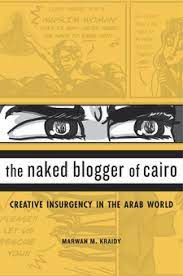
Kraidy, M. Marwan. (2017). The Naked Blogger of Cairo: Creative Insurgency in the Arab World. Harvard University Press: Cambridge, London. pp. 304.


Do you want to quell a social revolution? The easiest recipe is to defuse its incendiary social content by simply publicizing it as a quest for the sensational and voyeuristic. Short of ideas? You already have a rich arsenal of Oriental imagery and tropes. Therefore, portray those asking for their rights as unworthy of such demands since they haven't resolved the simplest of concerns; they are still mapping the geography of their second half, women. Diverting attention from demands for "bread, freedom, and social justice", the initial call of the Egyptian Uprising 2011, often works by portraying these revolutions as sensationalist and spectacular demands for gender equality. Worse, the counterrevolutions' best weapons narrate a story about how restrictive and addictive to restrict women's freedom because, as unworthy people, Arabs asking for their rights cannot see beyond their women's vaginas. Hence, they cannot be serious when asking for "bread, freedom and social justice".


Kraidy is neither naïve nor wicked to synthesize the Arab uprisings as a quest for voyeurism. His premise, however, hinges on the idea that the social uprisings can be approximated as a creative insurgency that is infatuated with, even fixated on, the body. The body has been the most salient trope that marks the creative insurgency, otherwise known as the Arab Spring. To illustrate his point, Kraidy distinguishes between three varieties of artworks, each deploying the body to serve its message. First, there are those incendiary works such as Bouazizi's suicidal self-inflammation, an act that had a domino effect as it deposed several dictators. Second, there are those sarcastic works with scornful references to dictators. Kraidy brings to evidence Omar Abulmaged's April 2, 2014, court sentence in consequence of the latter calling his donkey Sisi and adorning its head with a military cap. The case underlines a situation stretching decades before wherein Egyptians used to deride President Hosni Mubarek as the laughing cow, imitating the famous French cheese commercial brand, La vache qui rit. The third trope combines the serious and the sarcastic through nude art and is spearheaded by the young blogger Alaa El-Mahdy in her 2011 A Rebel's Diary.


It is not farfetched to conclude that the early two trope variations pave the way for the third, assumedly the most enigmatic and puzzling. Thus, The Naked Blogger of Cairo "explores the mixture of activism and artistry characteristic of revolutionary expression and tracks the social transformation of activism into Art and ensuring controversies." (p. 5) Towards this end, Kraidy finds that creative insurgency cannot be restricted as an instantiation of one artistic expression or another. A fair analysis of that creative insurgency's emergence must grapple with the one it finds confusing. Interestingly, El-Mahdy's nude photo is compared with other creative expressions from the mother of all revolutions, the French one, zooming on Eugène Delacroix's La liberté guidant le Peuple (1830).


With the human body as the governing principle for a creative insurgency, The Naked Blogger of Cairo lies in four sections with an introduction and conclusion. The introduction "In the Name of the People" highlights a problem: Why is the body so fundamental to the Arab uprisings? Furthermore, "How does the rise of digital culture complicate our understanding of the body in revolutionary times?" (p. 12) Standing in awe of the naked blogger, Kraidy develops: "by inviting both moral opprobrium and threats of physical oblivion, al-Mahdy's digital nude selfie had immediate rhetorical and physical consequences." (p. 18) Understandably, the sky is the limit for the readers' expectations to find all those rhetorical and physical consequences. 

Section One: "Burning Man" zooms into the visible and invisible dimensions of radical militancy, mostly in Tunisia, namely Bouazizi's act of self-inflammation. Kraidy finds the act has been less directed toward the dictator's stifling renditions of the country and more against his countrymen's approach to that stifling as a fait accomplait. Section Two: "Laughing Cow" invests in the opposite direction of section one. The gradual mode of activism, namely the sarcastic laugher, and mostly in Egypt. Like radical militancy, sarcasm too hinges on the body politics, and Kraidy finds that armed with only sarcasm and laughter, ordinary Egyptians have defied megalomaniacs ever since pharaonic times.


Section Three: "Puppets and Masters" explains how the human body is often at ease with both moods of expression: the radical and the sarcastic. As a result, revolutionary or creative insurgency chooses to mix the extreme with the gradual, using examples from Tunisia, Egypt, global activism, and the French Revolution. Understandably, the chapter prepares readers to register the content of the following section. With Section Four: "Virgins and Vixens", comes Kraidy's opportune time to sell readers the presumed seriousness of bodily undressing. Through a rhetorical phraseology, the author succeeds in affecting an aura of seriousness by what political scientists qualify as the blind spot of the king's two bodies. The blind spot—understood to be the king's male organ since it is only this organ that puts him on the same bar with other humans—facilitates the acceptance, even the balancing, of naked activism with all political, aesthetic, and ethical militancy.


"Requiem for a Revolution" or the conclusion asks whether simply women's bodies are engaged in men's political tussles less to liberate women and more to galvanize the populace around what is ultimately men's fixation on power. Women's bodies become tools whereby women are ultimately emptied of subjectivity and the capacity for free thinking and decision-making.


In order to make space for the voyeuristic and the sensational, Kraidy has to beat about the bush and lecture readers about the uses and abuses of body politics so that his rendering of the Arab uprisings may sound plausible. To buy his idea is to embrace an insult and participate in the still unfolding counterrevolution. There is simply no way whereby one may even begin to compare the conscious and principled acts of either Bouazizi, Shaimaa al-Sabbagh, or the Kurdish Women of Kobani fighting ISIS with the nude selfies of El-Mahdy and her several pretenders. Kraidy does not want to acknowledge that the counterrevolution aims to cast the class struggle as a gender, race, or faith struggle. The further to stay away from the class struggle, the safest the counterrevolution remains. To equate Bouazizi's act with El-Mahdy's is to participate in distortion as perpetuated by the false omnipresent and to ensure that the narrative of the revolutionaries of Tahrir and elsewhere will stay forever tarnished and uninviting.


Quite the contrary, the revolution precipitates a world order that does not call for spectacles and where bodies are loved, caressed, and cared for in dignity and mutual love. Only love is revolutionary and triumphant orders presiding over the false omnipresent always seek to divert attention from true and mutual love. What does El-Mahdy in her diary preach? In a nutshell, she communicates men-hating as if the world is short of hatred. Other than seeking to destroy the pillar of the nonetheless corrupt values of society, her method is hatred. Let us all recall how revolutionary couples married and committed to sacral (not sacred) vows and principled living in Tahrir. Their revolutionary friends congratulated them and savoured the delight of simply witnessing the promise of social love (not just harmony) and larger emancipations come true. Had Kraidy bothered to read El-Mahdy's A Rebel's Diary, he would find ages-old litanies and ill-articulated cliches regarding the alleged oppressive practices of the Orient.


Again, had Kraidy bothered, he would have found the right parallel to El-Mahdy's selfie, Delacroix's Femmes d'Alger dans leur appartement (1834), and certainly not La Liberté guidant le peuple (1830). It is not rocket science to note that with the latter, the bare-chested woman is a participant in the arduous struggle and an active one, for that matter, against forces of regression. Perhaps, she was among the group of women protestors whom Louis XVI famously ordered croissants au beurre when they were dying for lack of bread, showcasing the sovereign's divorce from reality which ultimately sealed his fate for good. With Femmes d'Alger, one traces a process that eventually propagated into El-Mahdy's selfie: the fetishizing principle, the need for a mysterious form of freedom, and freedom in Capital as slavery since both Algerian or Egyptian men do not know how to handle/to man their women. Hence, the reason why these women are slowly rotting in the harem. Only Capital—the logic in the selfie and the classical painting—is savvy and reliable when extracting value from these oriental women. What is most painful is the self-Orientalizing act that academics and serious academic publishing such as Harvard UP deem liberating and introduce it to the world as such.


But since the neoliberal order glamorizes El-Mahdy's daring act, Kraidy could see no alternative but to give his final assault and insult "… most revolutionary martyrs-at-large were dead and clothed men, whereas the emergence of women as icons in the Arab uprisings tended to result from their disrobement." (p. 13) How else to read this statement other than a reproduction of the patriarchal mindset that Tahrir revolutionaries brazenly fought against? Besides the insult, disrobement is glamorized because it is the only way to ensure the restructuring of capital forces and the valuation of surplus value. Every rebel-à-la-El-Mahdy labour is further devalued, literally prostituting workers, even those who never heard of El-Mahdy. How else to afford the imagined independence of one's place except through increasingly lower wages?  


Fouad Mami

Université d’Adrar (Algeria)

ORCID iD https://orcid.org/0000-0003-1590-8524

fouad.mami@univ-adrar.edu.dz