Sunday, 21 August 2011

John Miller and the Burial of Revolution

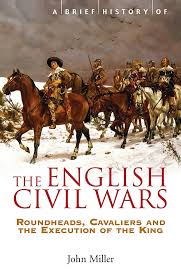
John Miller’s A Brief History of the English Civil Wars is more than just a concise account of the 1640s; it embodies the revisionist orthodoxy that has shaped English Civil War history since the late 20th century. The defining feature of revisionist historiography… is its explicit rejection of the Marxist interpretation that the English Civil War constituted a bourgeois revolution.”

Miller’s work challenges not only Christopher Hill and the Marxist Historians’ Group but also the idea that history progresses through class struggle and revolutionary change.

Miller and the revisionist turn

The revisionist school, including Conrad Russell, John Morrill, Kevin Sharpe, and Miller, emerged specifically to challenge the Marxist claim that the English Civil War was a bourgeois revolution. Hill’s works, The English Revolution 1640 and The Century of Revolution, maintained that the conflict symbolised the political ascendancy of a rising bourgeoisie over a feudal-absolutist regime, paving the way for capitalist growth.

Revisionists challenged this framework by arguing that there is no measurable "rising bourgeoisie," as men from all social classes participated on both sides of the conflict. They claimed that religion and short-term political errors, rather than class struggle, fuelled the events. This perspective views the episode as a largely contingent, preventable tragedy resulting from Charles I’s political mistakes and brief religious divisions. In this view, Charles I’s execution is seen as an unfortunate accident rather than the decisive overthrow of a feudal system.

Miller’s book illustrates this change by providing a vivid narrative and personality-focused explanations instead of a deep analysis of social forces at work. It richly describes court intrigues, religious factionalism, and military campaigns, but it does not explore the core contradictions of a society shifting from feudal to capitalist structures. This approach is typical of the revisionist tendency to shift from structural analysis toward emphasising contingency and “high politics.”

Hill and the concept of bourgeois revolution

The Marxist interpretation by Hill and British Marxist historians never relied on a simple, mechanically deterministic model. Hill recognised that a “chemically pure revolution"—where all members of a class align perfectly—was unrealistic. As Ann Talbot notes, "Hill... had read enough Marx and Lenin to understand that one could not expect a chemically pure revolution." The focus is not on sociological neatness but on the revolution's actual function: it inherently advanced bourgeois interests by dismantling the feudal-absolutist state, executing the king, abolishing feudal tenures, and creating the political environment necessary for capitalist growth. Hill’s works—Intellectual Origins of the English Revolution, Economic Problems of the Church, and The Century of Revolution—connect ideological and religious conflicts to changes in property, commerce, and class dynamics.

What Miller’s approach obscures

Revisionism cannot account for why people at the time viewed the 1640s as a period of unprecedented upheaval. As censorship eased, groups like the Levellers, Diggers, Ranters, and Fifth Monarchists gained visibility in print, advocating demands that went beyond merely restoring an “ancient constitution”: "They called for levelling social classes, ending private property, and establishing the rule of the saints." These groups articulated, using religious language, the social tensions brought about by the collapse of feudal relations and the rise of new forms of property and authority. Hill’s research considered these voices as evidence of profound structural change, whereas revisionism tends to dismiss them as marginal, eccentric, or solely theological.

The political function of revisionism

Miller’s focus on narrative and personality shifts away from exploring why civil war became possible and, eventually, inevitable. This creates a depoliticised history marked by vivid descriptions but lacking causal explanation, contingency without necessity, and tragedy without revolutionary context. The rise of revisionism can be traced to the period after the USSR's dissolution and the ideological campaigns against Marxism: "The revisionist school gained ascendancy in the period following the dissolution of the USSR, when the bourgeoisie internationally sought to bury the concept of revolution itself.”

This is essential. Denying that the English Civil War was a bourgeois revolution is tantamount to denying that capitalism arose through revolutionary violence. If capitalism is seen as the outcome of slow, peaceful development, then viewing it as susceptible to overthrow via revolutionary struggle is dismissed from the start. Ann Talbot’s WSWS review of Hill clearly links this political viewpoint: “The prevailing academic orthodoxy is that there was no bourgeois revolution because there was no rising bourgeoisie and that people from all social classes can be found on either side of the struggle ... The whole unpleasant episode could have been avoided if only Charles II had been a little wiser.”

Contemporary significance

Many modern historians, like Simon Schama, often see themselves as "born-again Whigs,” offering a polished account of constitutional development and national cohesion. This view echoes the tradition that Hill aimed to challenge during his work. Instead of introducing a radically new perspective, revisionism mainly revisits earlier, pre-Marxist Whig interpretations of history, now presented with an air of empirical scepticism.

Today, whether the English Civil War was a bourgeois revolution remains a relevant issue for the working class. “A class that cannot face its own revolutionary origins cannot face the revolutionary future that awaits it." The bourgeoisie once celebrated its revolutionary history; now, its denial of that past shows its evolution into a fully counter-revolutionary class. To see the English Revolution as a true revolution—and to glean lessons for the fight against capitalism—is the role of Marxist history and a politically organised, conscious working class.

Miller’s A Brief History of the English Civil Wars, by aligning with revisionist orthodoxy, engages in the ideological act of masking that revolutionary legacy. In contrast, your critique aligns with the traditions of Hill and Trotsky, emphasising that the English Civil War was a pivotal event marking the shift from feudalism to capitalism, and that its significance can only be understood from the perspective of class struggle.

Bibliography

Primary and historiographical works

  • Christopher Hill, The English Revolution 1640 (London: Lawrence & Wishart, 1940).
  • Christopher Hill, The Century of Revolution 1603–1714 (London: Nelson, 1961).
  • Christopher Hill, Intellectual Origins of the English Revolution (Oxford: Clarendon Press, 1965).
  • Christopher Hill, Economic Problems of the Church in the Sixteenth Century (London: Oxford University Press, 1956).
  • Leon Trotsky, Where Is Britain Going? (London: New Park Publications, 1973; originally 1925).
  • John Miller, A Brief History of the English Civil Wars (London.
  • Conrad Russell, The Causes of the English Civil War (Oxford: Clarendon Press, 1990).
  • John Morrill, “The Religious Context of the English Civil War,” like the English Revolution, ed. Morrill (London: Longman, 1993).
  • Kevin Sharpe, The Personal Rule of Charles I (New Haven: Yale University Press, 1992).

On Marxist and revisionist historiography

  • Alastair MacLachlan, The Rise and Fall of Revolutionary England: An Essay in the Fabrication of Seventeenth‑Century History (New York: St. Martin’s Press, 1996).
  • Harvey J. Kaye, The British Marxist Historians (Cambridge: Polity Press, 1984).

WSWS and contemporary commentary

  • Ann Talbot, “Christopher Hill and the English Revolution,” World Socialist Web Site (WSWS).
  • Simon Schama, various works and interviews describing himself as a “born‑again Whig” in relation to English history.


Wednesday, 3 August 2011

Review of Michael Bennett’s The Civil Wars Experienced: A Marxist Reassessment

Michael Bennett’s The Civil Wars Experienced offers a clear and engaging overview of the English Civil War, aiming to expand the narrative beyond just Westminster and Whitehall. His focus on the lived experiences of ordinary people, along with his coverage of the Scottish and Irish theatres and emphasis on the conflict's brutality and social upheaval, reflects key aspects of the 1990s revisionist perspective. However, this strength is tempered by a notable limitation: Bennett almost uncritically accepts the revisionist view that rejects labelling the English Revolution as a bourgeois revolution. This interpretive stance is significant, as it represents one of the major historiographical debates of the past fifty years, with Bennett aligning with the camp that sees the revolution as a multinational crisis devoid of social content.

Bennett’s work, while full of narrative detail, is constrained by the revisionist framework he uses. Viewing the English Civil War as a revolution—one that shattered the feudal aristocracy’s political power and laid the groundwork for capitalism—requires a socio-economic analysis that Bennett neither attempts nor acknowledges. As a result, his book effectively describes the war but does not interpret it as a revolution.

The Revisionist Turn: Description Without Explanation

Bennett is part of a group—including Morrill, Stoyle, Lindley, and, earlier, Conrad Russell—that, in the 1990s, challenged the dominant Marxist and Whig views of the mid-20th century. Their aim was not just to refine previous “grand narratives" but to launch a political counter-attack against the very idea of the bourgeois revolution, as the critique suggests.

The revisionist method is familiar: collect empirical anomalies, emphasise local and contingent factors, highlight cross-class loyalties, interpret ideological innovation as religious eccentricity, and dismiss socio-economic causation as merely 'deterministic.' Bennett adheres to this method, noting that individuals from all social classes participated on both sides of the conflict and concluding that class struggle does not account for the war. However, this reflects a fundamental misunderstanding of the Marxist approach. “One does not expect a chemically pure revolution in which members of a single social class align on one side of the barricades and members of another on the opposite side.”

The goal is not merely to tally artisans or gentlemen on each side. Instead, it is to uncover the social forces that drove diverse people into conflict and to examine the new, revolutionary ideas that often appeared in the form of religious sectarianism—sometimes in a "curious and archaic guise." Despite its rich empirical detail, Bennett’s book focuses on describing the war rather than on exploring the causes of the revolution.

The “Three Kingdoms” Framework: A Useful Lens Turned Into an Evasion

Bennett’s key organising principle is the “Wars of the Three Kingdoms” framework. This approach is not inherently problematic, as understanding the English Revolution requires considering Scotland and Ireland. However, revisionists employ this framework not to enhance analysis but to avoid it. When used to soften or dismiss the revolutionary aspects of the events, this framework becomes a form of evasion.

Bennett’s account portrays the conflict as a national crisis involving governance, dynasties, and religious tensions throughout Britain. However, it overlooks the revolutionary break of 1649—the execution of Charles I, the abolition of the monarchy and the House of Lords, and the emergence of parliamentary sovereignty. These were truly revolutionary acts, not just constitutional errors. The choice of the term “Three Kingdoms” instead of "English Revolution” reflects a specific political stance, not neutrality. This perspective frames the revolution as a tragic event that could have been avoided “if only Charles I had been a little wiser," echoing Royalist sentiments in a modern academic tone.

Why the Bourgeois Revolution Framework Remains Indispensable

Bennett dismisses the notion that the English Civil War was a bourgeois revolution without offering arguments, as if the question were already settled. However, the framework of a bourgeois revolution remains crucial for several reasons. The defining feature of a bourgeois revolution is its outcome, not the purity of class struggles: it involves the dismantling of feudal political systems, the establishment of parliamentary dominance, the rise of ideas like natural rights and contract theory, and the paving of the way for capitalism. The execution of Charles I was not merely a misunderstanding among kingdoms; it marked a fundamental break from feudal traditions. “No monarch sat easily on the throne after that event, emphasising its revolutionary significance.

The Revisionists Reject Causation Itself

The revisionists’ main argument—that there was no growing bourgeoisie and thus no bourgeois revolution—is historically unsustainable. In early seventeenth-century England, there was significant economic change: expansion of commercial agriculture, London’s rise as a financial hub, greater involvement in global trade, and the rise of a politically active gentry and merchant class. Ignoring these changes overlooks the very factors that enabled the revolution.

The Levellers, Diggers, and sectarian radicals were not just religious eccentrics; they also promoted new ideas about sovereignty, natural rights, and political equality. These notions were revolutionary, even when conveyed through biblical language. Bennett recognises their existence but struggles to explain how these ideas arose.

Hill’s Achievement—and the Task That Remains

Christopher Hill’s achievement was twofold: he identified the mid-seventeenth-century crisis as a revolution that overthrew one class and brought another to power. He recognised that the masses drive revolutions and require a change in consciousness. Bennett’s work implicitly challenges both ideas. However, Hill also had his limitations; he never fully contextualised the English Revolution within its broader international setting.

A comprehensive Marxist analysis should incorporate the wider European context, including the Thirty Years' War, Dutch republicanism, continental natural rights theory, and the decline of feudalism across Europe. In contrast, the revisionists, by restricting their focus to three kingdoms, distance themselves further from this broader international perspective.

Bennett’s Strengths and the Marxist Counter‑Case

Bennett’s The Civil Wars Experienced provides a clear, accessible, and often vivid overview of the conflict. It works well as a narrative history and offers insight into the human experience of war. However, its analysis is limited by its revisionist approach, which dismisses socio-economic causes, interprets revolutionary upheaval as merely a dynastic crisis, and considers ideological change as religious eccentricity.

Sources and Bibliography

Primary Sources

  • Burton, Thomas. Parliamentary Diary. London: 1828.
  • Clarendon, Edward Hyde. The History of the Rebellion and Civil Wars in England. Oxford: 1702–1704. (Clarendon’s analysis of political divisions is cited in JSTOR’s discussion of Marx and Engels’ interpretation of the Civil War .)
  • Hobbes, Thomas. English Works. London: 1839–45. (Hobbes’ remarks on the social power of the Presbyterians are referenced in the JSTOR article .)
  • Harrington, James. The Commonwealth of Oceana. London: 1656. (Harrington’s class analysis is discussed in the JSTOR article .)

Marxist Historiography

  • Carr, E.H. What Is History? London: Penguin, 1961.
  • Engels, Friedrich. The Peasant War in Germany. 1850.
  • Hill, Christopher. The Century of Revolution, 1603–1714. London: Nelson, 1961.
  • Hill, Christopher. Intellectual Origins of the English Revolution. Oxford: Clarendon Press, 1965. (Hill’s method and influence are discussed in Elearn College’s article on Marxist historians .)
  • Hill, Christopher. The World Turned Upside Down: Radical Ideas During the English Revolution. London: Penguin, 1972. Hill’s focus on radical movements is discussed in the 2026 article on his historiographical impact
  • Hill, Christopher. Economic Problems of the Church. Oxford: Clarendon Press, 1956. (Referenced in Elearn College’s discussion of Hill’s economic analysis .)
  • Hilton, Rodney. Bond Men Made Free: Medieval Peasant Movements and the English Rising of 1381. London: Temple Smith, 1973.
  • Hobsbawm, Eric. The Age of Revolution, 1789–1848. London: Weidenfeld & Nicolson, 1962.
  • Thompson, E.P. The Making of the English Working Class. London: Gollancz, 1963.

Revisionist Historiography

  • Bennett, Michael. The Civil Wars Experienced. London: Routledge, 2000.
  • Morrill, John. The Nature of the English Revolution. London: Longman, 1993.
  • Russell, Conrad. The Causes of the English Civil War. Oxford: Clarendon Press, 1990.
  • Russell, Conrad. Parliamentary History in the 17th Century. Various essays.
  • Stoyle, Mark. Soldiers and Strangers: An Ethnic History of the English Civil War. New Haven: Yale University Press, 2005.
  • Lindley, Keith. The English Civil War and Revolution: A Sourcebook. London: Routledge, 1998.

Three Kingdoms / British Context

  • Canny, Nicholas. Making Ireland British, 1580–1650. Oxford: Oxford University Press, 2001.
  • Cust, Richard, and Hughes, Ann (eds.). The English Civil War. London: Arnold, 1997.
  • Ó Siochrú, Micheál. God’s Executioner: Oliver Cromwell and the Conquest of Ireland. London: Faber & Faber, 2008.
  • Stevenson, David. The Scottish Revolution, 1637–1644. London: David & Charles, 1973.

International and Continental Context

  • Asch, Ronald G. The Thirty Years’ War: Europe’s Tragedy. London: Allen Lane, 2010.
  • Israel, Jonathan. The Dutch Republic: Its Rise, Greatness, and Fall, 1477–1806. Oxford: Oxford University Press, 1995.
  • Skinner, Quentin. The Foundations of Modern Political Thought. Cambridge: Cambridge University Press, 1978.
  • Trevor-Roper, Hugh. Religion, the Reformation, and Social Change. London: Macmillan, 1967.

Modern Marxist Commentary

  • Talbot, Ann. “Christopher Hill and the English Revolution.” World Socialist Web Site, 2003.
  • North, David. The Russian Revolution and the Unfinished Twentieth Century. Mehring Books, 2014.
  • Walsh, Chris. Various articles on revisionism and bourgeois revolution, WSWS.

Articles Identified in Search Results

  • “The English Civil War Interpreted by Marx and Engels.” JSTOR. (Contains discussion of Harrington, Hobbes, Clarendon, and class analysis in contemporary sources. )
  • “Marxist Historians and English Civil War.” Elearn College, 2025. (Discusses Hill’s intellectual legacy and Marxist historiography. )
  • “How Christopher Hill Turned History Upside Down by Studying the Radicals of the English Civil War.” 2026. (Provides biographical and historiographical context for Hill’s work. )


Friday, 8 July 2011

Two Posts from Christopher Thompson


(I am reprinting two articles from Chris Thompson Blog. His blog can be accessed at http://earlymodernhistory1.blogspot.com/

The Kishlansky Case

Earlier this week, I noted the publication of Ian Gentles's new book, Oliver Cromwell. God's Warrior and the English Revolution, and of the festschrift for John Morrill edited by Michael J.Braddick and David L.Smith, The Experience of Revolution in Stuart Britain and Ireland. The former arrived on Tuesday and the latter today. I have been leafing through both. Ian Gentles's work is, as one would expect, clearly written and a persuasive work of scholarship. I have not had the time to read the Morrill festschrift in detail but I have looked at Mark Kishlansky's tribute in detail.

 It is a warm piece testifying to a friendship that has lasted for almost forty years. I was, however, particularly struck by Kishlansky's account (ibid., Pp.xxx-xxxi) of the controversy into which he entered in the pages of The Historical Journal in 1990-1991 and subsequently in The Journal of British Studies. The target of his criticism is not named at all but is simply described first of all as someone "who happened to hold a junior position at Cambridge" and then as a person who "held only a position as a College fellow" when everyone interested in the period knows exactly who he means. He also claims that, following comments from the Historical Journal's two readers of his original draft article and from John Morrill himself, "the amended essay would then be submitted [to his target]... for response".

I do know a little about this episode. Kishlansky's prospective attack was revealed by a very senior American historian from a university on that country's eastern seaboard on a visit to London in the summer of 1990. He described how he had learnt from Kishlansky himself, then holding a post at the University of Chicago, of the planned publication of this article in the Historical Journal. News of this inevitably spread and came to the ears of Kishlansky's intended victim who knew nothing of this manoeuvre and who had not been supplied with a copy. He naturally learnt of its contents and details about those to whom it had already been circulated. No less naturally, he began preparing his response. Soon the whole matter became widely known and entangled in intellectual politics in Cambridge and elsewhere.

I do not know who the "senior member of the field" was who sent John Morrill "a menacing missive" demanding that Kishlansky's essay should not appear and asserting that Morrill's own career would be damaged if it did. G.R.Elton is a possibility but Conrad Russell seems a much more likely candidate. Either way, Kishlansky's essay did appear in the Historical Journal late in 1990 to be followed in the next edition by a far-reaching rebuttal. In my view, Kishlansky had much the worse of this exchange but others will, no doubt, have their own opinions.

Nostalgia Marxist style

When James Holstun, the literary scholar and Marxist polemicist, wrote his appreciation of the career and works of the late Brian Manning in 2004, he observed with a degree of regret that Marxism was hardly to be found amongst academic historians studying the English Revolution but could only be discovered in the ranks of tutors for the Workers' Educational Association and amongst political scientists and sociologists. I was reminded of this observation when reading the essay by Geoff Kennedy, a political scientist at Durham University, on Radicalism and Revisionism in the English Revolution (in Mike Haynes and Jim Wolfreys, ed., History and Revolution. Refuting Revisionism, Verso Press 2007).

His picture of the historiography of the pre-1970s was predicated on belief in a traditional social interpretation of the events of the 1640s and 1650s deriving from the works of Christopher Hill, R.H.Tawney and Lawrence Stone later rejected at the behest of G.R.Elton and under the stimulation of the works of Conrad Russell. Revisionists apparently denied the importance of historical materialism and adopted a form of static traditionalism that was itself a form of reductionism. Long-term causes, especially the importance of the development of capitalism, had been abandoned to Dr Kennedy's regret. Political history had been denied its social context and isolated from it by this regrettable process.

I am afraid that the pillars underpinning this argument will not bear such weight. The arguments advanced by Hill in 1940 and by Tawney in 1941 had become fiercely contested in little over a decade: the criticisms of Hugh Trevor-Roper and J.P.Cooper inspired a vast range of Ph.D.theses and books on the fortunes of the gentry and peerage that would not have been composed had there been such a "social interpretation" in place. 'Revisionism', to use Ted Rabb's phrase, was itself a protest against the kind of reductionism advocated by Hill, Tawney and Stone and was, in any case, principally, an Oxford rather than a Cambridge phenomenon. Kennedy's appeal to Bob Brenner's case developed in the festschrift for Lawrence Stone that the 1590s saw a shift to economic rents on large estates is very fragile: Stone had not, in truth, examined leasing practices in any detail on any aristocratic estate: where this has been done, e.g. on the estate of the Rich family in Essex, the length of leases (at 21 years) and the high proportion going to former tenants suggests that there was little, if any, such competition and certainly no development of agricultural capitalism in this period.

Geoff Kennedy's view that the Levellers in the 1640s represented a petit-bourgeois group carries little conviction. Of course, there are those who would still like to adhere to the views of Hill or Tawney in 1940-1941 but those views have long ceased to have any purchase in serious historical study. 'Revisionism' has been dead for twenty years. Neither Marxism or Revisionism is relevant to serious historical research in this period any longer. The clock cannot be turned back whatever Geoff Kennedy might hope for.


Sunday, 3 July 2011

Review: F.D. Dow’s Radicalism in the English Revolution, 1640–60

F.D. Dow’s 1985 monograph, published by the Historical Association, offers a brief yet insightful analysis of one of the most politically charged areas of English historiography: the interpretation of radicalism in the mid-seventeenth century and its connection to the English Revolution overall. Its significance lies not only in its discussion of the Levellers, Diggers, and other radical factions but also in what it unintentionally reveals about the intellectual environment in which it was written—a context shaped by the rise of revisionist ideas and the decline of Marxist historical analysis.

The Book’s Purpose and Context

Dow’s goal is simple: to introduce students and general readers to the radical movements of the English Revolution in an accessible way. However, the straightforward format conceals a deeper tension within historiography. By 1985, revisionism had become the dominant perspective in academic history. Its key ideas—favouring contingency over causation, emphasising elite politics rather than class conflict, and prioritising locality over national change—had overshadowed traditional structural and socio-economic analyses associated with scholars such as Christopher Hill, Brian Manning, A.L. Morton, and the broader Marxist tradition.

Dow’s book is written at a time when Marxist historiography faced persistent criticism, radicalism was often dismissed or minimised, and the English Revolution was seen as a political crisis rather than a social revolution. In response, Dow challenges the revisionist tendency to downplay radicalism, but she stops short of fully adopting the Marxist perspective that contextualises radicalism historically. This creates the book’s main paradox.

Restoring Radicalism to the Narrative

Dow’s key contribution is her assertion that radicalism was central rather than peripheral. She persuasively argues that radical ideas originated from genuine social pressures; the Levellers and Diggers presented coherent political agendas; radicals were rooted in identifiable social groups like artisans, small producers, insecure tenants, and journeymen; and the revolution created political space for normally suppressed demands. This serves as a valuable correction to the revisionist view that sees radicalism as a minor or eccentric element. Additionally, Dow offers clear summaries of Leveller constitutional proposals, insightful analyses of Winstanley’s religious and political beliefs, and useful overviews of Fifth Monarchists, Baptists, and other sects. He also emphasises that radicalism was structurally linked to the crisis of the 1640s. Overall, Dow reestablishes radicalism’s importance in history — and that alone makes the book worthwhile.

The Limits of the “Middle Way”

Dow struggles when trying to balance Marxist structural analysis with revisionist contingency. This middle ground is intellectually unviable. Dow recognises social pressures such as economic dislocation, pressure on small producers, insecurity among copyholders, and the rise of commercial agriculture, but stops short of seeing them as manifestations of class conflict. As a result, she views radicalism as a reaction to hardship rather than as the political voice of a class whose economic base is being undermined by capitalist growth.

She does not accept the concept of bourgeois revolution. As a result, Cromwell becomes a pragmatic commander, not the representative of a rising class. The Levellers become a “radical party,” not the political expression of a declining class. The Diggers become moral visionaries, not utopian communists limited by the absence of a proletariat. Without class analysis, the revolution loses its structural coherence.

Dow’s claim that the Levellers lacked leadership is unwarranted. His assertion that they were “doomed from the start” because of weak leadership is historically inaccurate. Lilburn, Walwyn, and Overton were among the most advanced political thinkers of the century. Their failure stemmed from structural issues, not personal shortcomings: the class they represented was unable to sustain the revolution. Dow’s emphasis on leadership reflects his reluctance to view the situation through a class-based perspective.

Dow’s portrayal of the Diggers is sympathetic yet somewhat incomplete. She praises Winstanley’s intelligence but fails to link the Diggers’ shortcomings to the lack of a class capable of actualising communism. As a result, the Diggers are seen more as tragic idealists than as forerunners of later socialist movements. Dow’s work should be viewed within the larger ideological debate over the significance of the English Revolution. By dismissing long-term causes, class conflict, and structural changes, revisionism served a political purpose: it effectively eliminated the concept of revolution itself. Dow resists this trend — but cautiously. She reintroduces radical elements into the story, yet he does not fully restore the idea of revolution. He recognises social conflict but not class struggle; he acknowledges the Levellers and Diggers but not the bourgeois revolution that enabled them.

The book is valuable yet politically cautious. Dow opposes revisionism but does not fully reject it. As a result, her work serves as a transitional text—a partial rehabilitation of radical ideas that avoids a complete Marxist interpretation.

Bibliography

Primary and Secondary Sources on the English Revolution

Dow, F.D. Radicalism in the English Revolution, 1640–60. Historical Association Studies. London: Historical Association, 1985.

Manning, Brian. Referenced in Dow, Radicalism in the English Revolution, 1640–60, p. 5.

Morton, A.L. Freedom in Arms: A Selection of Leveller Writings. London: Lawrence and Wishart, 1975.

Underdown, David. Riot, Rebellion and Popular Politics in England, 1603–1660. Oxford: Clarendon Press, 1985. (Referenced for caution on applying “class” to 17th‑century society.)

Everitt, A.M. The County Committee of Kent in the Civil War. Manchester: Manchester University Press, 1966. (Referenced as part of conservative localist revisionism.)

Morrill, John. The Revolt of the Provinces: Conservatives and Radicals in the English Civil War, 1630–1650. London: George Allen & Unwin, 1976. (Referenced for short‑term, locality‑focused revisionism.)

Adamson, John. The Noble Revolt: The Overthrow of Charles I. London: Weidenfeld & Nicolson, 2007. (Referenced for elite‑centric interpretation of the Civil War.)

Pamphlets and Radical Writings

Walwyn, William. Quotation from the pamphlet beginning:

“That an inequitable thing it is for one man to have thousands, and another want bread…” (From your document.)

Anonymous (Leveller tract). The Mournful Cries of Many Thousand Poor Tradesmen, who are ready to famish through decay of Trade. Or, the Warning Tears of the Oppressed. 22 January 1648. Available at: http://oll.libertyfund.org/pages/leveller-tracts-9#9.21 (oll.libertyfund.org in Bing)

“O hearke, hearke at our doores how our children cry bread, bread, bread…” (from your document)

Mercurius Elencticus. Issue of 7–14 June 1648. British Library, E447/II, 226. (Quoted for hostile description of Fifth Monarchists.)


Wednesday, 29 June 2011

Barry Coward (1941–2011): Historian of the English Civil War and the Revisionist Assault on Marxism

Barry Coward, who passed away in 2011, was a leading scholar in 17th-century English history for many years. As a dedicated lecturer at Birkbeck, University of London, and a past president of the Historical Association, Coward mentored countless students and authored influential works that serve as key references in the discipline. His books, The Stuart Age: England 1603–1714 and his biography of Oliver Cromwell, continue to be extensively used in university courses.

Coward’s career unfolded amidst substantial political and intellectual upheaval. His work should be interpreted within the broader historiographical shift starting in the 1970s, when the Marxist perspective on the English Revolution—especially advocated by Christopher Hill—encountered ongoing critiques. Hill and the Communist Party Historians’ Group demonstrated that rigorous scholarship could coexist with a revolutionary perspective, portraying the English Civil War as a crucial phase in the shift from feudalism to capitalism and the emergence of bourgeois dominance.

Coward supported the revisionist school, which called for dismantling this framework. The revisionists argued that "there was no long-term crisis of the Stuart state, no rising bourgeoisie, and no class conflict driving events.” They saw the English Civil War not as a revolution but as a political crisis fuelled by misjudgements, religious tensions, and Charles I's personal flaws. This perspective shifted the emphasis from structural causes to elite strategies and decision-making.

Coward held a moderate stance within this perspective. His work on the Stuart Age recognized aspects of social and economic unrest and acknowledged the importance of popular mobilization, but his interpretive approach was mainly revisionist. He questioned the idea of a bourgeois revolution and was hesitant about class analysis, viewing the conflict as a collapse of elite consensus rather than a revolutionary change caused by mass forces.

His biography of Cromwell highlights both the strengths and limitations of this approach. It offers a detailed, scholarly portrayal of Cromwell as a political figure. However, as noted in the document, it misses “a sense of the revolutionary dynamic, of the mass forces that drove events beyond the control of any individual.” In Coward’s portrayal, Cromwell appears as a figure influenced by circumstances; in Hill’s view, he embodies deep social change.

The emergence of revisionism was closely linked to the rightward shift in British society—marked by the defeat of the labour movement, the rise of Thatcherism, and an intensified ideological battle against Marxism after the USSR's collapse. Revisionists aimed to disconnect historical research from revolutionary politics, arguing that revolution was merely an illusion created by outdated Marxist ideas. Their efforts both mirrored and bolstered the dominant intellectual mood of the time.

Recently, 'post-revisionist' scholarship has challenged the dominance of revisionism by reintroducing structural analysis. Still, the main question persists: Is it possible to understand the English Revolution without Marxism? Their answer was no. “The revisionists could focus on empirical details, but they failed to offer a unified alternative explanation for why English society fragmented in the 1640s... Only Marxism... can explain these events.”

Barry Coward was a committed and meticulous historian whose work remains influential. However, his contribution should be viewed within a historiographical framework that, in the end, tended to mask the revolutionary nature of the 17th-century crisis. Grasping the English Revolution as a true revolution—and extracting its political lessons—is still closely linked to the Marxist tradition that Coward, despite his scholarly achievements, opposed throughout his career.


Thursday, 23 June 2011

Historians on the Levellers and the English Revolution 1642-1652

by Chris Thompson

I am afraid that it is not true to claim that there was a dearth of works on the Levellers before Christopher Hill and other members of the Communist Party’s Historians’ Group began work to rescue them from historical oblivion or that this was the responsibility of Whig historians. S.R.Gardiner considered the Levellers’ influence in the period from 1647-1649 in some detail in Volume IV of his history of the English Civil War and in his biography of Oliver Cromwell: the first Agreement of the People, now known to be the product not of Leveller thinking but of a group of radicals around Henry Marten, appeared in 1889 in his Constitutional Documents of the Puritan Revolution.

It was C.H.Firth who edited and published The Clarke Papers, which throw such light on relations between the leaders of the New Model Army, the Agitators and Levellers, between 1891 and 1901. Eduard Bernstein’s book, Cromwell and Communism; socialism and democracy in the great English Civil War was published in German in 1895 and in an English translation in 1930. G.P.Gooch’s work, The history of English democratic ideas in the 17th century, first appeared in 1898 and T.C.Pease’s book, The Leveller Movement; A Study in the history and political theory of the English Great Civil War, was published in 1916. Margaret James’s book, Social Problems and Policies during the Puritan Revolution 1640-1660, was published in 1930 as was J.W.Gough’s article, ‘The Agreements of the People’ in History in the following year. The truth is that there had been a significant amount of work done on the Levellers long before they attracted the attention of Christopher Hill or of the Communist Party’s Historians’ Group.

It is true that there were Marxist historians of importance working in the pre- and post-Second World War periods. But, by the early-1970s, their influence was largely spent as far as the early modern period was concerned as was that of Lawrence Stone. Marxist influence had never been overwhelming or absolutely predominant even if it had attracted the support of, perhaps, a third of the specialists in this period. Hugh Trevor-Roper, J.P.Cooper and J.H.Hexter had seen to that. ‘Revisionism’ in the sense you use the term was born in the late-1960s and was itself defunct by the early-1990s.

To be a non-Marxist is not to be a ‘revisionist’. Personally, I prefer a situation in which a range of influences and trends shape the historiography of the period before, during and after the struggles of the 1640s and 1650s in the British Isles. Critical attacks on Kishlansky, Morrill and Russell will not revive historical materialism of the kind advocated in the 1950s and 1960s. The Levellers were an interesting phenomenon and important for their ideas amidst the competing political and religious debates of the late-1640s but their support was relatively small and they were gone in the space of a very few years. Such a transient phenomenon deserves serious historical evaluation rather than hagiography.


Tuesday, 7 June 2011

Sir Michael Livesey (1614–c.1665): A Biographical Sketch

Sir Michael Livesey holds a unique and often confusing position in the political and military history of the English Civil War. Born in 1614 into a family gaining prominence in the English gentry, he exemplifies the complex relationship between local politics, religious beliefs, and the revolutionary movements that transformed mid-seventeenth-century England. Although he is later remembered as one of the most passionate of the king’s judges, his radical roots stem from a world far more complex than the clear-cut choices of the 1640s suggest.

Origins and Family Standing

A family influenced Livesey’s early life with a stable and growing social status. His grandfather was sheriff of Surrey, and his father established the Kentish branch of the Livesey family, embedding them in local society and politics. “The family soon became settled, so much so that they became essential community members.”

Their rise was solidified in 1627 when the Liveseys received a baronetcy, establishing their position within the county’s elite. This heritage highlights the surprising nature of Livesey’s later political path. ‘Considering the family’s high standing, it is somewhat puzzling that Michael Livesey was such a key figure for Parliament and also a radical independent.’

Early Political Activity and Puritan Zeal

By the late 1630s and early 1640s, Livesey was recognised for his strict Puritan views. As Jason Pearcy’s biography states, he supplied information “against recusants to the Long Parliament in November 1640.” His activism intensified in 1642, when he became a leading figure in the Kentish Petition of Grievances. This document sparked a strong parliamentary backlash and threatened the promoters with legal action.

Parliament’s declaration underscores the importance given to the petition: "Whosoever shall be found to further or to countenance this Petition… shall be held to be Disturbers of the peace of this Kingdom." Livesey’s involvement positioned him among the county’s most politically assertive individuals.

Civil War Service and Reputation

During the First Civil War, Livesey led a Kentish regiment and served as sheriff in 1643. His military career was characterised by both success and controversy. He was recognised for his strict tactics against Royalist troops. Still, his soldiers were often criticised for misconduct and looting, leading to warnings that he needed to control them "to prevent further alienation of the community."

Despite these tensions, Livesey’s political stance became more radical over time. He aligned with the Independent faction, which strongly advocated religious freedom, political reform, and, eventually, the abolition of the monarchy. His regiment supported Pride’s Purge in December 1648, an event that removed moderate members from the House of Commons and set the stage for the king’s trial.

Regicide

Livesey’s most lasting historical significance is his role as a regicide. Trusted by Cromwell and the military leadership, he served on the High Court of Justice and attended every session of Charles I’s trial. His signature ranks fifth on the death warrant. His passionate involvement is vividly described as: "He was so eager that he was almost waiting with a quill in his hand, dripping with ink." This depiction, both somewhat humorous and unsettling, captures the fervour with which Livesey embraced the revolutionary moment.

Motives and Historical Debate

Livesey left no diary and wrote little, making his personal motivations difficult to reconstruct. Historians have long debated why members of the gentry — men like Livesey — chose the parliamentary and even radical cause. Conrad Russell famously argued that long‑term structural causes cannot explain gentry radicalism, suggesting instead that Charles I’s frustrations were easier to understand than the gentry’s revolutionary impulses.

Russell states, “It is certainly easier to understand why sheer frustration might have driven Charles to fight… than… why the English gentry might have wanted to make a revolution.” In contrast, Marxist historians like Christopher Hill highlight the rise of new class forces and ideological movements.

Ann Talbot characterises Hill’s approach as identifying how social currents brought together people from diverse backgrounds to oppose the king. In contrast, localist historians like Alan Everitt and John Morrill offer a different perspective, highlighting that regional concerns—such as local grievances, religious conflicts, and county politics—had a greater impact on gentry actions than broad national ideologies. Morrill’s book, 'Revolt of the Provinces,' is a key work representing this view.

Conclusion

Sir Michael Livesey’s life exemplifies the contradictions of the English Revolution. A man of established gentry background, he became one of the most radical Independents and a willing participant in the king’s execution. His actions cannot be reduced to personal temperament or simple ideological commitment. Instead, they reflect the complex pressures of local politics, Puritan religious fervour, emerging class realignments, and the broader revolutionary crisis of the 1640s.

Marx's closing quote aptly summarises Livesey’s importance: “Men make their own history, but they do not make it as they please…” Livesey was decisive and often passionate, yet he always operated within a rapidly changing world. His life vividly demonstrates how individuals can navigate — and sometimes even hasten — revolutionary forces.


Sunday, 29 May 2011

Alison Plowden’s In a Free Republic: Life in Cromwell’s England (2006)

Alison Plowden’s In a Free Republic offers a social history of the Commonwealth and Protectorate, depicting daily life from the execution of Charles I in 1649 to the monarchy's restoration in 1660. As a prolific popular historian of Tudor and Stuart courts, Plowden approaches the era with the same narrative style that characterised her earlier works on Elizabeth I and the domestic intrigues of the sixteenth century. The book is engaging, well-crafted, and filled with anecdotal details. However, it ultimately does not fully capture the English Revolution as a true revolution.

The English Revolution was the first major bourgeois revolution and a pivotal turning point in world history. It overthrew the feudal state, dismantled absolutism, and paved the way for capitalist growth. The conflict involved the emerging bourgeoisie and parts of the gentry fighting against the monarchy, the old aristocracy, and remaining feudal social structures. Additionally, it was a moment when propertyless groups—the soldiers of the New Model Army, the Levellers, and the Diggers—tried to extend the revolution beyond what the propertied classes found acceptable.

While Plowden’s book is charming, it cannot fundamentally explore these questions. It functions more as popular antiquarianism than for historical analysis, providing descriptions of Puritan dress, household customs, religious fears, and the theatre closures. However, it fails to address the core fact of the era: a king was tried and executed by representatives of a new social class. The revolution remains hidden behind its decorative elements.

The Ideological Work of the Title

Plowden’s title, 'In a Free Republic,' is quite telling. Cromwell’s England was considered 'free” only within a narrow, class-based context, where the bourgeoisie had freed itself from absolutist restrictions. It was not a true democracy. The voting rights remained limited to property owners. Parliament was often purged when it did not align with Cromwell’s class interests.

The Levellers, advocating for universal male suffrage, legal equality, and the end of oligarchic control, faced imprisonment, silencing, and even execution. Cromwell’s military campaign in Ireland was a colonial terror that left a permanent scar on history. Describing this society as a “free republic” without addressing the contradiction echoes the ideological mystifications of both the seventeenth-century ruling class and the present day.

The Limits of Popular History

Plowden's approach aligns with British popular history, characterised by storytelling, anecdotes, and a focus on personalities. While this style offers clarity, accessibility, and rich human detail, it inherently lacks the capacity for deeper analysis of class forces, modes of production, ideological struggles, or the political economy of revolution.

Trotsky’s critique of Whig historiography is directly relevant. Popular history tends to oversimplify social struggles by shifting focus from class conflicts to individual stories. The English Revolution is often portrayed merely as a setting for narratives about Puritan families, fashions, food, and customs.

A social history of “life in Cromwell’s England” risks becoming a mere idyllic scene unless it engages with the period's revolutionary essence. Plowden’s approach falls short in examining: The New Model Army as a political entity, not just a military force; The Putney Debates, where ordinary soldiers debated sovereignty and equality; The Levellers, advocating for universal male suffrage and legal equality; The Diggers, challenging private property; Cromwell’s class-based purges; and the Irish campaign, seen not as an anomaly but as a key act of bourgeois consolidation. These events are central to the English Revolution. Without acknowledging them, the era risks being reduced to a costume drama.

Plowden and the Revisionist Turn

Modern academic historiography has moved away from Christopher Hill’s Marxist approach, now claiming: there was no rising bourgeoisie; the revolution was not truly revolutionary; class was not the key factor; and Cromwell was a conservative defending traditional liberties. This reinterpretation is not apolitical; it aligns with the ideological interests of current capitalism, which promotes the view that revolutions are impossible, class struggle is illusory, and ordinary people cannot intentionally change society. Plowden is not a revisionist scholar, but her method aligns with this trend by default. A narrative of daily life without class analysis becomes a soft form of revisionism: the revolution is present only as décor.

Plowden, Hill, Russell, and Morrill on Cromwell’s England

Alison Plowden’s In a Free Republic: Life in Cromwell’s England (2006) occupies an ambiguous position within the historiography of the English Revolution. It is not a work of academic scholarship, nor does it pretend to be. It belongs to the genre of British popular history—narrative, anecdotal, personality‑driven, focused on domestic life and social texture. However, because it treats the decade of the Commonwealth and Protectorate, it inevitably enters a field shaped by profound historiographical conflict.

To grasp Plowden’s book, it is essential to place it within the context of the three main interpretive schools of the past fifty years: Christopher Hill’s Marxist perspective, Conrad Russell’s revisionist rebuttal, and John Morrill’s post-revisionist synthesis. While Plowden does not directly address these scholars, her omissions, focus areas, and storytelling decisions subtly reflect her implicit alignment and the ideological implications of her approach.

Christopher Hill: Revolution as Class Struggle

Christopher Hill (1912–2003), the leading Marxist historian of the English Revolution, stands in stark contrast to Plowden’s approach. Hill’s work—The Century of Revolution, God’s Englishman, The World Turned Upside Down—insists that the mid-seventeenth-century crisis was a bourgeois revolution, driven by conflicts between the rising bourgeoisie and sections of the gentry; the monarchy and the feudal aristocracy; and the propertyless masses who sought to push the revolution further.

Hill’s method is structural, dialectical, and materialist. He treats the New Model Army as a political force, the Levellers and Diggers as expressions of class consciousness, and Cromwell as the representative of a class whose interests determined the limits of the revolution.

Hill’s key insight—that Charles I's execution was a deliberate revolutionary act—falls outside Plowden’s perspective. In a Free Republic, the trial and execution seem like background events rather than the pivotal moment that established the republic she discusses daily. Hill would argue that discussing “life in Cromwell’s England” requires explaining why Cromwell’s England existed.

Plowden’s book is thus not merely incomplete; it is methodologically incompatible with Hill’s project. Where Hill sees class struggle, Plowden sees atmosphere. Where Hill sees revolution, Plowden sees period colour. Where Hill foregrounds the masses, Plowden foregrounds domestic detail. Hill’s absence from her narrative is itself a historiographical statement.

Conrad Russell: The Revisionist Counter‑Revolution

Conrad Russell (1937–2004), a prominent revisionist historian, embodies the intellectual resistance to Hill’s ideas. In works such as The Causes of the English Civil War and Parliamentary History, he contends that there was no rising bourgeoisie, that class was not the decisive factor, that the Civil War resulted from short-term political mismanagement, and that the revolution was not truly revolutionary. Russell’s approach is intentionally anti-Marxist; he dismisses structural explanations, rejects the notion of coherent class interests, and views the conflict as a political crisis of the state rather than a societal one. His work relies heavily on empirical research, but that empiricism is used to undermine the era's revolutionary significance.

Plowden’s book aligns implicitly with Russell’s revisionism—not because she adopts his arguments, but because her method produces the same effect. By focusing on daily life, customs, and personalities, she reproduces the revisionist tendency to treat the Commonwealth as an aberration, a curious interlude rather than a decisive transformation. The revolution becomes a backdrop, not a subject.

Russell would likely have approved of Plowden’s approach to the Levellers, Diggers, and New Model Army as not being political groups with clear social agendas. He would have supported her avoidance of class analysis. Additionally, he would have appreciated her portrayal of Cromwell as a multifaceted figure rather than solely as a class representative. While Plowden’s book is not revisionist in its scholarship, its tone and approach have a revisionist effect, making the revolution seem more familiar and domesticated.

John Morrill: Post‑Revisionism and the “War of Religion”

John Morrill (b. 1946), a leading post-revisionist historian, seeks to integrate Hill and Russell by shifting the interpretive focus. He contends that the English Revolution was not primarily a class struggle or a constitutional crisis, but a war of religion. Morrill views the revolution as a conflict over differing visions of godly reformation, portraying the New Model Army as a Puritan institution, Cromwell as a providentialist warrior, and the Levellers as political radicals driven by religious beliefs. While acknowledging the period's revolutionary nature, Morrill shifts the primary driving force from class to religion. Plowden’s book also emphasises religion, but with less analytical depth—her Puritans are moralistic and socially restrictive but not political, her Cromwell is devout but not ideologically shaped by religion, and her republic is godly but not revolutionary.

Where Morrill sees religion as a structuring force, Plowden sees it as cultural texture. She adopts the surface of Morrill’s argument while omitting its substance.

Plowden’s Position: Pastoralisation of Revolution

Placed alongside Hill, Russell, and Morrill, Plowden’s historiographical stance becomes evident: she avoids class analysis, as Russell does, emphasises religion only as an atmosphere, as Morrill does, and lacks Hill’s revolutionary framework. Her book does not challenge historiographical debates; instead, it retreats from them, presenting a vision of a republic without revolution, a society without class struggle, and a decade devoid of dialectic. This approach is politically charged, as it idealises revolution within domestic life, thereby supporting the ideological needs of contemporary capitalism. It dismisses the idea that ordinary people can consciously change society, denies that revolutions have causes, agents, and outcomes, and suggests that history is not driven by class struggle. Overall, Plowden’s work reflects a broader cultural move toward depoliticising the past.

The Continuing Relevance of the English Revolution

The English Revolution remains one of the most consequential events in world history. It was the first of the great bourgeois revolutions that cleared the ground for capitalist development. Its contradictions—above all, the conflict between the property‑owning classes who made the revolution and the propertyless masses who wanted to carry it further—prefigure the struggles of every subsequent revolution, including the socialist revolution that the working class must still make.

Plowden’s book, for all its merits as a work of popular history, cannot illuminate these questions. It offers the reader a republic without revolution, a society without class struggle, a decade without its dialectic. It is a portrait of Cromwell’s England in which Cromwell’s revolution has been politely removed.

For readers seeking to understand the English Revolution as a world‑historical event, Plowden’s book must be read critically—and supplemented by works that grasp the period in its full social and political depth.

Bibliography

Primary Sources

  • The Putney Debates, ed. Michael Mendle (Cambridge University Press, 2001).
  • Gerrard Winstanley, The Law of Freedom (1652).
  • John Lilburne, England’s New Chains Discovered (1649).
  • The Trial of Charles I, ed. J. G. Muddiman (Everyman, 1928).
  • Oliver Cromwell, Letters and Speeches, ed. Thomas Carlyle (1845).

Marxist and Socialist Historiography

  • Christopher Hill, The World Turned Upside Down (Penguin, 1972).
  • Christopher Hill, The Century of Revolution (Routledge, 1961).
  • Christopher Hill, God’s Englishman: Oliver Cromwell and the English Revolution (Penguin, 1970).
  • Ann Talbot, “Christopher Hill and the Socialist Tradition,” World Socialist Web Site (2003).
  • Leon Trotsky, Where Is Britain Going? (1925).
  • Karl Marx, The Eighteenth Brumaire of Louis Bonaparte (1852).
  • Friedrich Engels, The Peasant War in Germany (1850).

Revisionist and Post‑Revisionist Historiography

  • Conrad Russell, The Causes of the English Civil War (Oxford University Press, 1990).
  • John Morrill, Revolt in the Provinces (Longman, 1976).
  • Mark Kishlansky, A Monarchy Transformed (Penguin, 1996).
  • Austin Woolrych, Britain in Revolution (Oxford University Press, 2002). 

Popular History

  • Alison Plowden, In a Free Republic: Life in Cromwell’s England (Sutton Publishing, 2006).
  • Alison Plowden, The Young Elizabeth (1971).
  • Alison Plowden, Marriage With My Kingdom (1977).


Saturday, 28 May 2011

Christopher Thompson on: Lawrence Stone, The Causes of the English Revolution (Routledge Keegan Paul. 1972)


(This is a reply to my original post on Lawrence Stone’s The Cause of the English Revolution. I am not sure whether I am going to reply to it. Needless to say I do not agree with some his remarks although some clarification might be in order. I would welcome any other comments from my readers. Please do not be shy. All posts within reason will be published)

The publication of this work in 1972 offered sixth-form pupils and first-year undergraduates a useful overview of the origins and causes of the English Revolution from the other side of the Atlantic. Since his move to Princeton in 1963, Stone had become increasingly interested in the work of anthropologists and political scientists just as he had been in the 1940s in that of economic historians and in the light, that such work might throw on long-standing historical problems.

Whatever subscription he had once paid to the influence of Marx and Tawney had long since gone by the time in the late-1950s and early-1960s that he composed The Crisis of the Aristocracy, 1558-1641. Stone was certainly never a Marxist in the sense that Christopher Hill was. His early teaching at Princeton was, in any case, devoted, as the festschrift in his honour shows, to a survey course on the evolution of English society between c.1500 and c.1700. Stone certainly liked being at the centre of academic attention and of controversy, hence his production of works like this although it was also true to say that he had, by the early-1970s, become cut off from the main currents of academic research in England.

The origins of Hugh Trevor-Roper’s dislike of Stone did not lie in the latter storming out of a revision class at Christ Church College in Oxford. In fact, the quarrel over the gentry arose from Hugh Trevor-Roper lending his transcripts on aristocratic indebtedness from the Recognizances for Debt then held in the Public Record Office in Chancery Lane. Stone used this material without Trevor-Roper’s permission and with the most misleading of indications as to how he had acquired it in his 1948 article in The Economic History Review.

Furthermore, because he had not understood the technicalities of this source, Stone had assigned to the late-Tudor peers levels of debt twice their real size. Trevor-Roper was perfectly entitled to criticise Stone’s work and, indeed, that of Tawney whose stature as an historian was considerably higher in 1950 than that of Stone but whose analytical errors were, as J.P.Cooper shortly thereafter pointed out, even more serious

The controversy probably stimulated more interesting research into English history in the seventeenth-century than any before or possibly since. Hugh Trevor-Roper was a friend of Jack Hexter until the publication of Hexter’s essay, Storm over the Gentry, in Encounter in May, 1958. For several years thereafter, their friendship was in abeyance. Politically, they were very different indeed, as anyone who knew them both would understand. There is no significance in the funding of that magazine for their historiographical positions.

The problem with Stone’s 1972 work was not just its use of sociological jargon like ‘multiple dysfunction’, ‘preconditions’, ‘precipitants’ and ‘triggers’ but also its antiquated analytical framework, its assumption that very long-term factors were at work, that the loss of landed possessions by the Crown and Church and, as he erroneously believed, the peerage made Revolution inevitable as the apparatus of Stuart rule failed to cope with the rise of the gentry, the spread of Puritanism, and the decline in the prestige of the Crown and Court and the Laudian church. Stone held that the political and religious history of the pre-Civil War period had already been written by S.R.Gardiner and C.H.Firth and fundamentally needed no emendation. He was profoundly wrong as Nicholas Tyacke and others were already demonstrating.

Stone’s work on the origins and causes of the English Revolution was dated by the time it appeared in 1972. It belonged essentially to the 1950s and early-1960s. No amount of sociological dressing could make it fashionable again.

By then, Trevor-Roper had written and published his ground-breaking essay on the Union of the Crowns. It was to the hypotheses about the significance of ‘multiple kingdoms’ that the future in 1972 belonged.


Friday, 22 April 2011

A Marxist Assessment of Gerrard Winstanley’s A Common Treasury: (Revised and Expanded) Verso 2011

Winstanley Between History and Ideology

The 2011 Verso edition of A Common Treasury, introduced by Tony Benn, compiles Gerrard Winstanley's writings—arguably the most radical figure of the English Revolution. It calls for serious critical reflection, not only because of Winstanley’s historical importance but also because Benn’s admiration for him exposes the political decline of Labour reformism. When parliamentary socialists adopt revolutionary figures, it is never a neutral act; it is an ideological move aimed at domestically shaping the past to meet current needs. To truly grasp Winstanley, one must place him within the class struggles of the 1640s; to understand Benn, one must see him in the context of post-war Labour's class compromises.

Winstanley and the Diggers: Revolution from Below

Gerrard Winstanley (1609–1676) was the leader and thinker behind the Diggers, also known as the True Levellers. In 1649, the same year King Charles I was executed, they began to occupy and farm common land at St George’s Hill in Surrey. Their assertion that the earth was “a common treasury for all” was more than poetic; it was a revolutionary idea. “They declared that the earth was ‘a common treasury for all,’ rejecting private property in land as the root of all social evil.”

Winstanley’s pamphlets — including The New Law of Righteousness and The Law of Freedom in a Platform — outlined a vision of a society free from buying and selling, landlords, lawyers, masters, and servants. This was not mere philosophical reflection but a practical response to the ongoing revolution. The Diggers arose from the common people during the Civil War. While Cromwell and the leaders of the New Model Army aimed to establish the political framework for capitalist growth, the Diggers sought to expand the revolution beyond its bourgeois limitations.

They embodied the most progressive expression of popular awareness in the 1640s, a consciousness shaped by war, upheaval, and the decline of traditional authority. The decline of traditional authority was inevitable. They faced brutal suppression: settlements were razed, leaders were beaten, and cattle were slaughtered. Cromwell, a fierce enforcer of bourgeois class interests, had little regard for the Diggers, just as he did for the Levellers, whose leaders he had executed. This marked the end of a revolutionary era.

Winstanley’s Place in the Pre‑History of Socialism

Winstanley holds a unique place in the early history of socialist ideas. Christopher Hill, who did more than any other scholar to bring Winstanley out of obscurity, recognised that revolutions are driven by crowds whose awareness must evolve. Winstanley's work exemplifies this profound transformation.

However, accuracy in history is crucial. Winstanley was not a socialist in the modern sense; his communism was utopian rather than scientific. His arguments relied on biblical prophecy and mystical pantheism—Reason as God and the “rising of Christ in sons and daughters.” He urged Cromwell and the propertied classes to see the truth rather than organise the oppressed as a political force to seize power.

As Engels explained in Socialism: Utopian and Scientific, utopian socialists could vividly describe the harms of class society with moral clarity but lacked awareness of the material force needed to eliminate these ills. The proletariat—the class destined to abolish all classes—was not present in mid-17th-century England. Winstanley could only appeal to the righteous, while Cromwell’s response was to ignore him when possible and suppress him when necessary. This is not a moral failure but an inherent limitation, as Winstanley’s vision was unattainable at the time because the class capable of implementing it had not yet emerged.

Tony Benn’s Appropriation: Radicalism Made Safe

This passage reveals Benn’s political stance. Benn, who passed away in 2014 and was a lifelong Labour Party member—by then an instrument of big business—spent his career opposing Winstanley's principles. Winstanley challenged the political establishment and fostered an independent movement of the dispossessed. Benn served 49 years in Parliament and, as recently as 2013, stated: “I don’t believe in the idea that you can build a new socialist party … There is a radical element, and that element ought to be able to live within the Labour Party.”

This is a significant statement, reflecting Benn’s overall political stance: the containment of working-class resistance within the boundaries of bourgeois parliamentarism. "Benn’s entire political life was devoted to channelling working-class opposition back into the safe confines of bourgeois parliamentarism." During the Winter of Discontent in 1978–79, Benn served as a cabinet minister responsible for declaring a State of Emergency against striking workers. In his diary, he admitted: "I am just being sucked into this terrible military operation to hold the working class back.”And then he did it anyway.

Benn’s adoption of Winstanley exemplifies political appropriation, turning a revolutionary leader who pioneered an independent movement of the dispossessed into a romantic figure for Labourism—a century-long tradition of silencing working-class independence. This act domesticates Winstanley, rendering him acceptable for the drawing room, Fabian pamphlet, or Verso catalogue.

The Historical Lesson: What Connects Winstanley to Scientific Socialism

What truly matters in Winstanley's thought isn't his idealistic plan for a communist commonwealth—which couldn't have succeeded given 17th-century circumstances—but his insight that private property in the means of life is the root of exploitation, and that the exploited need to organise independently of their rulers. This idea links the Diggers of 1649 to the revolutionary workers’ movements of the 20th and 21st centuries.

However, it's important to recognise that Winstanley's approach is fundamentally different from scientific socialism, and these differences shouldn't be overlooked. Winstanley’s shortcomings stemmed from the limitations of his time—the working class was not yet able to form itself as a political force capable of driving socialist change. Today, that situation has changed. The working class now makes up the vast majority of the global population. The main barrier to socialism is no longer the underdevelopment of material conditions but the lack of revolutionary leadership within the working class. The International Committee of the Fourth International is actively working to develop such leadership.

Against the Politics of Historical Comfort

Benn’s portrayal of Winstanley is more than just a historical recount; it functions as a political distraction. It implies that the radical tradition could be revived within Labourism, achieving the “common treasury” through incremental parliamentary reforms. However, this is not enough. The working class requires its own party, rooted in the Fourth International’s programme, to realise what Winstanley only envisioned: the expropriation of the expropriators and the creation of a society driven by human need rather than private profit.

Winstanley’s writings remain impactful not because they provide a detailed plan for socialism, but because they embody the early idea that liberation must originate from beneath — through the self-organisation of the oppressed. Honouring Winstanley does not mean romanticising him or using him to support Labourism, but rather recognising his historical limits and advancing his struggle on a more developed, scientific basis.


Tuesday, 29 March 2011

Historians and the passing of time


From Christopher Thompson

I ought to begin by saying that I have become increasingly fond of Keith Livesey's blog, A Trumpet of Sedition. He and I do not agree on the origins and causes, the course and significance and the consequences of the struggles in the British Isles (or the Civil Wars or Revolution) of the 1640s and 1650s. I believe that the existence of differing views is a good thing because it stimulates debate and new research. He is attached to the views of figures like Christopher Hill and Brian Manning, both Marxists and both figures from my youth. Their approaches were superseded with the rise of the mis-named 'revisionism' of the mid-1970s.
Christopher Hill ceased to shape the course of historiographical debates at that time: it is doubtful whether Brian Manning, whose views had been formed in the early-1950s and which changed remarkably little, ever had. 

This process - of once fashionable views going out of fashion - happens to everyone. It happened about twenty years ago to Conrad Russell. He no longer shapes historiographical debates about these events. So, I hope Keith Livesey will forgive me when I say that there is no group of revisionists controlling academic or any other forms of discussion about the 1640s and 1650s in these islands. The debate has moved on: Christopher Hill like Conrad Russell is 'old hat'. Historians now wear different headgear and will change it again in the future.

My Reply

I would like to return the compliment made by Christopher Thompson on my blog and take up briefly a few of his points. I enjoy his blog. It is the first blog I read and contains extremely valuable information and insight into Early Modern England. As he has mentioned above we do not see eye to eye on the origins and causes of the English Revolution but that is life. If everybody agreed on everything History would be a very boring subject.

In fact I am of the opinion that through understanding contending views of the civil war we get a closer approximation as to its complexities. Christopher is of course right when he says that different generations throw up different types of historians and for that matter different types or schools of history. Perhaps I am wrong to say that the revisionist historians control current historiography. Control is too strong a word but they certainly do dominate. But I will allow a concession to Christopher and admit that I need to carry out a far more accurate analysis of their historiography and politics. If the new group of historians have moved beyond the term revisionists then what are they proposing and can a common theme be detected amongst them. The next few months will show.


Sunday, 27 March 2011

Making the Radicals Safe: Bradstock’s Radical Religion in Cromwell’s England and the Revisionist Retreat from Revolution

Andrew Bradstock's _Radical Religion in Cromwell's England: A Concise History from the English Civil War to the End of the Commonwealth_ comes at a time when the historiography of the English Revolution has been increasingly stripped of its revolutionary elements. Since Christopher Hill's passing, academic narratives have shifted towards a revisionist view that dismisses the rise of the bourgeoisie, portrays the Civil War as an avoidable elite quarrel, and denies it as a true revolution. Simon Schama's claim of being a "born-again Whig" exemplifies this ideological retreat, highlighting the current trend away from revolutionary interpretations.

Bradstock's book is influenced—indeed limited—by this climate. Although it claims to be a "concise history," it functions more as a theological overview of radical Protestant sectarianism. Its interpretive approach mirrors the modern attempt to depoliticise the English Revolution and portray its commoner movements as harmless in the eyes of the current ruling class.

The Theological Frame: A Category Error

Bradstock, a trained theologian, naturally approaches 'Radical Religion in Cromwell's England' with his scholarly discipline. His previous book, 'Faith in the Revolution,' presented his view of the Levellers, Diggers, Ranters, Fifth Monarchists, and early Quakers as a recoverable tradition of radical Christian witness. In this new work, that perspective is not just evident—it forms the core of his analysis.

The issue is not that religion had no part in the English Revolution. As Engels noted in Socialism: Utopian and Scientific, 17th-century bourgeoisie used religious language in their revolutionary efforts because a secular political language had not yet emerged. Calvinism supported the idea that the accumulation of wealth and the challenge to the feudal hierarchy were justified.

Bradstock challenges the usual view by reversing the relationship. Instead of seeing religious language as a medium for expressing class forces, he considers theology the core of the radical movements themselves. The Levellers are portrayed as radical Protestants; the Diggers as Christian communitarians; the Fifth Monarchists as millenarian dissenters. Their class content becomes obscured behind doctrinal analysis.

The Plebeian Wing of a Bourgeois Revolution

The radical sects Bradstock chronicles were not theological curiosities. They were the plebeian wing of the bourgeois revolution, representing the rural poor, the dispossessed, and the lower‑middle strata who sought to push the revolution beyond the limits acceptable to the grandees around Cromwell.

Bradstock's theological framework fails to account for several historical events: Cromwell's suppression of the Levellers at Burford in 1649, which was driven by bourgeoisie counter-revolution rather than religious doctrine; the Diggers' occupation of St George's Hill, which was more a protest against enclosure and primitive accumulation—key aspects of early capitalist development—than a utopian Christian project; and Winstanley's shift from a mystical visionary to a critic of property, which only makes sense when viewing class dynamics as central.

By viewing these movements as chapters in Christian dissent, Bradstock hides the revolutionary ambitions of the petty bourgeoisie and rural poor. His "concise history" is brief because it leaves out the crucial element: the class struggle.

The Political Function of Revisionism

The revisionist view of the English Revolution's collapse isn't just an academic curiosity; it's a political tool today. By claiming Britain never underwent a bourgeois revolution, the ruling class sustains the myth that the country's history is marked by gradual reforms, compromise, and constitutional stability. As a result, Marxism appears as an outsider, disconnected from English history.

Hill's work significantly challenged this mythology. However, "Radical Religion in Cromwell's England," despite its narrative strengths, does not advance that challenge. Instead, it depoliticises the radical sects, portraying them as a safe, sanitised religious heritage, which ultimately renders them acceptable to the very establishment they once challenged. The subtitle—"A Concise History from the English Civil War to the End of the Commonwealth"—reveals this approach. Here, "concision" is not a virtue but a limitation, as it narrows the focus and omits class dynamics that are essential to understanding the radical sects.

Conclusion

Bradstock provides a clear and organised overview of seventeenth-century radical religion. However, it is the religious perspective that makes the book politically ineffective. At a time when the ruling elite aims to erase revolutionary history from Britain, Radical Religion in Cromwell's England—despite its sincerity—tends to mask the class forces behind the English Revolution and to diminish its radical impact. A truly historical perspective must start where Bradstock leaves off: recognising that groups such as the Levellers, Diggers, Ranters, and Fifth Monarchists were not just religious dissenters but the working-class leaders of a bourgeois revolution whose lessons remain highly relevant today.